
The modern office furniture market ignores a massive demographic. Standard desk chairs are engineered around an industry-average male height of five feet and nine inches. For anyone under five feet and four inches, the biomechanical results are disastrous.
Feet dangle freely. The sciatic nerve compresses violently against the hard edge of the seat pan. The lumbar curve hits the thoracic spine instead of the lower back. Headrests push the neck forward into a vulture-like posture that guarantees cervical strain.
Finding genuine ergonomic office chairs for short people requires ignoring subjective marketing claims. Buyers must look directly at mechanical dimensions. Seat depth and minimum gas cylinder height dictate everything regarding postural health. A workstation chair cannot be ergonomic if the user’s feet do not rest flat on the floor.
This technical evaluation examines three highly searched desk chairs to determine their actual viability for petite frames. We stripped away the promotional jargon during our testing. Our focus remains entirely on structural mechanics, material durability, and real-world biomechanical alignment.
The Biomechanical Challenge for Shorter Frames
Most brands fail completely when attempting to build the best desk chair for short frame users. They simply take a massive executive chair and label it “petite” because the armrests slide up and down. This creates severe physical consequences.
When a petite ergonomic chair has a seat depth exceeding 17 inches, a shorter user physically cannot reach the backrest. The back of the knees jams against the seat lip. To relieve this painful pressure, the user slides forward on the cushion.
This forward migration instantly destroys pelvic support. The lower spine rounds into a “C” shape. This loads immense pressure directly onto the lumbar discs. No amount of advanced lumbar technology can fix a spine that is sitting three inches away from the backrest.
Armrest width represents another hidden trap. A proper office chair for short legs must feature armrests that pivot inward aggressively. If armrests are bolted 20 inches apart, a smaller user must splay their elbows outward like wings just to type. This unnatural angle creates chronic tension in the trapezius muscles over an eight-hour shift.
Our evaluation process focused ruthlessly on geometric reality. Minimum seat height must accommodate shorter shins. Seat depth must shrink enough to allow full backrest contact. Lumbar apexes must adjust low enough to actually brace the sacrum.
Quick Comparison Table
| Product Name | Produt Image | Best For | Minimum Height | Buy Now |
|---|---|---|---|---|
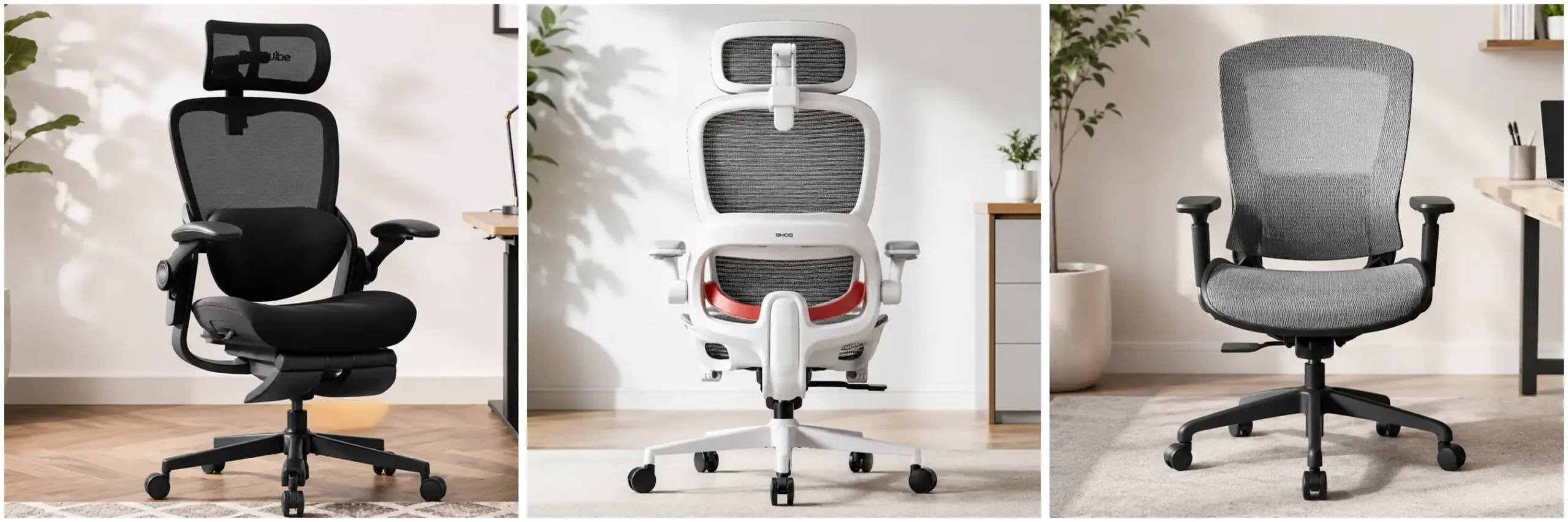
| CabeVibe CabLady S2 | 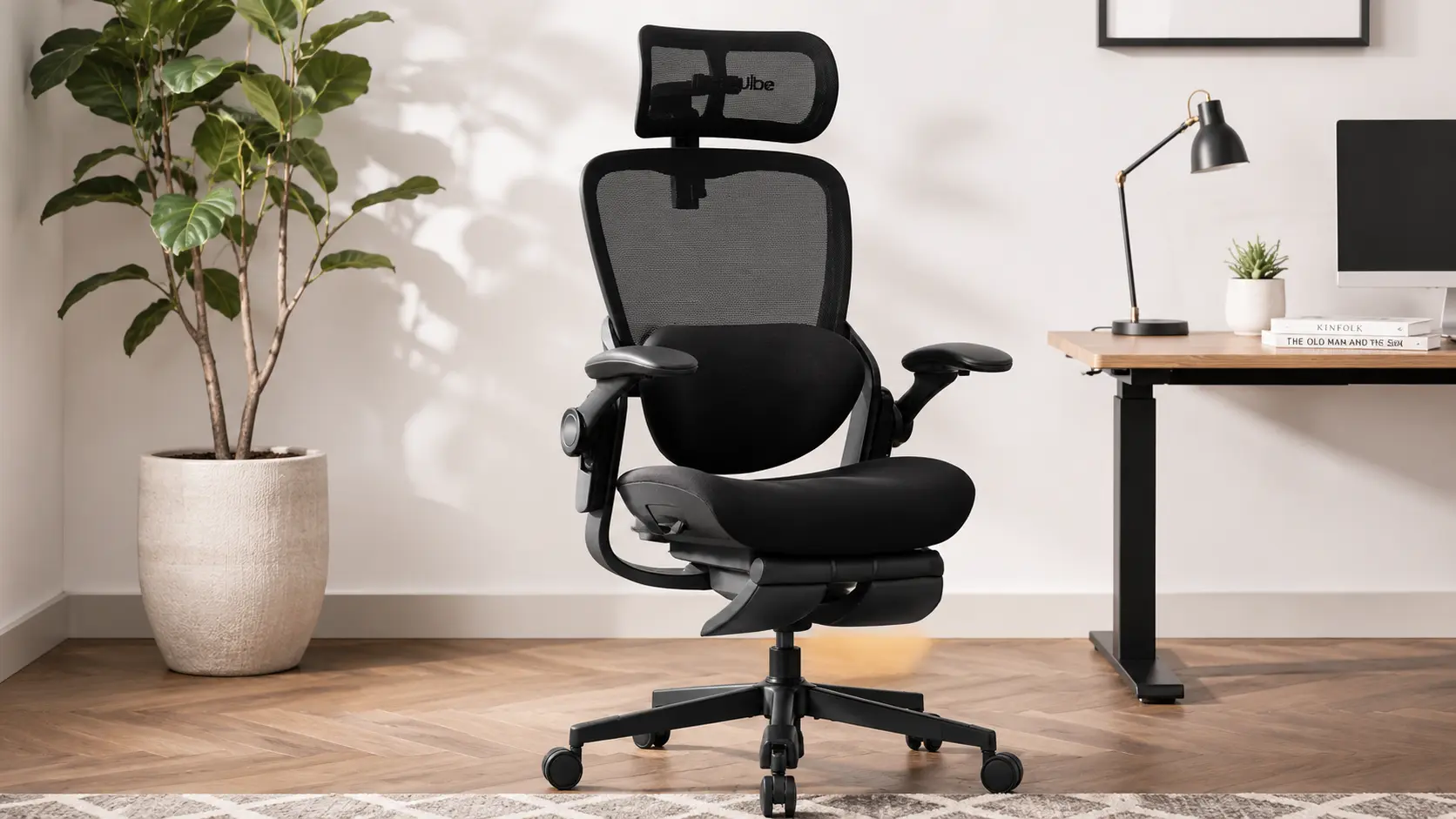 | Under 5’4″ Petite Users | 17.7 inches | 🛒Check Price on Amazon |
| SIHOO B100 (Light Grey) | 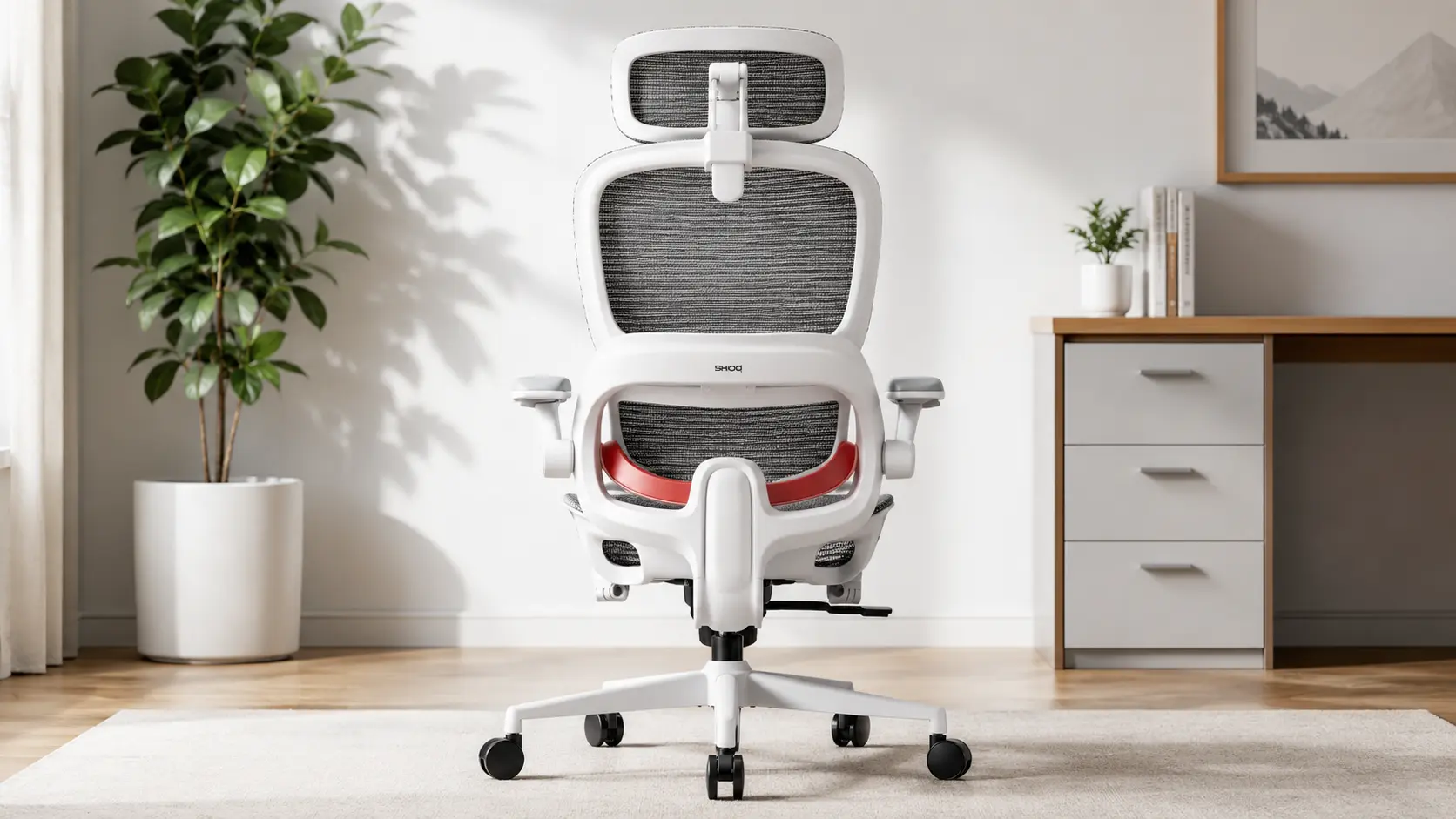 | 5’2″–5’6″ Value Seekers | 18.3 inches | 🛒Check Price on Amazon |
| ELABEST T96 | 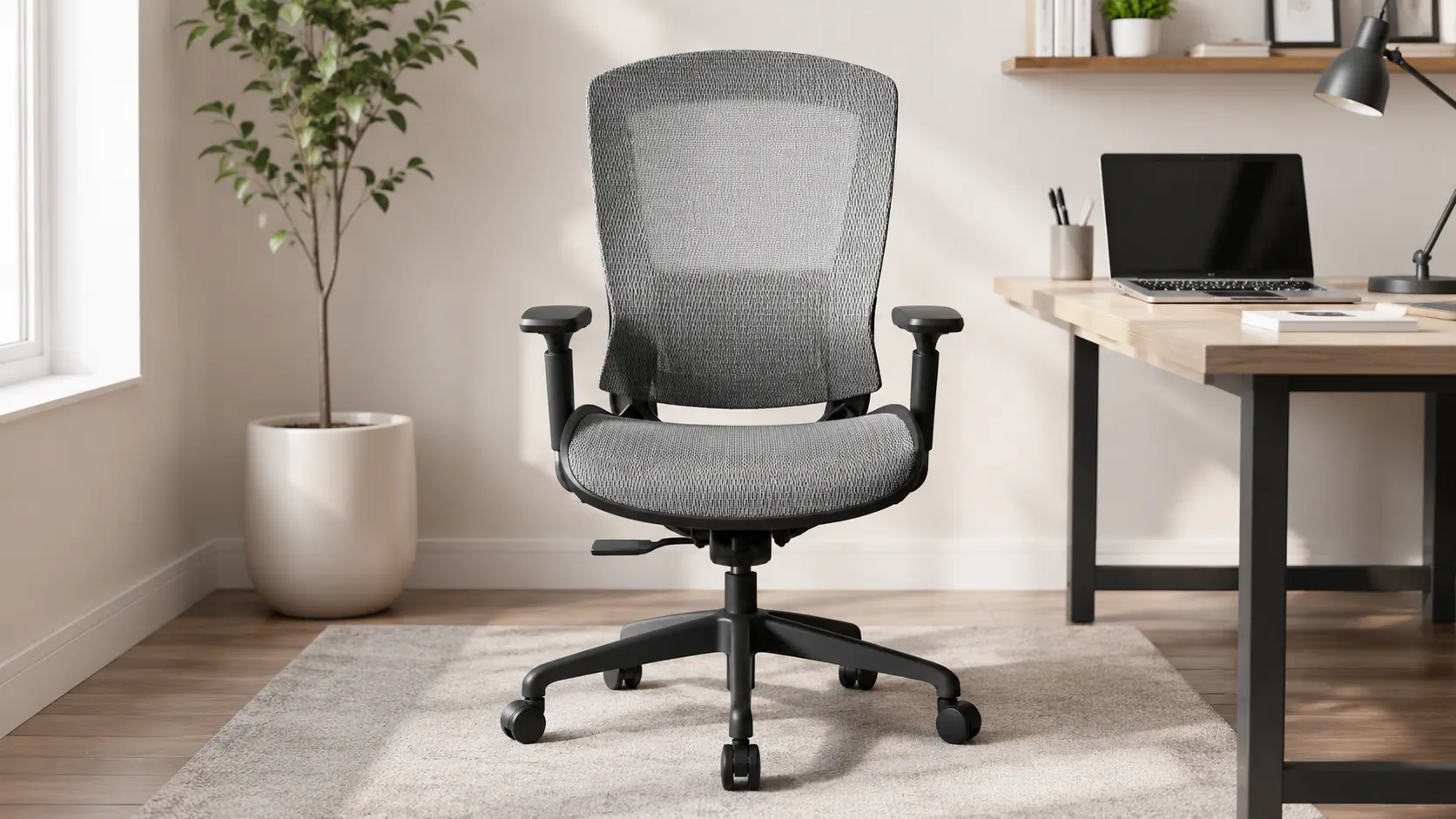 | Budget-Conscious 5’4″–5’8″ | 19.6 inches | 🛒Check Price on Amazon |
1. CabeVibe CabLady S2 Petite Office Chair
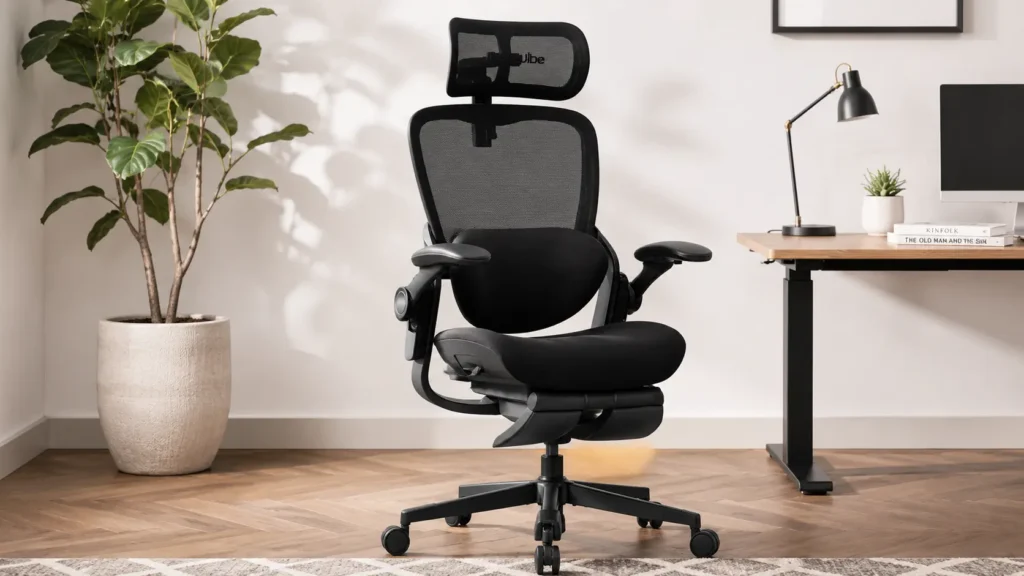
The CabLady S2 represents a rarity in the seating market. CabeVibe designed it from the ground up for smaller biomechanics. This is not a shrunken standard frame. It targets users ranging from 4’7″ to 5’11”, specifically catering to women and small-frame individuals who struggle with oversized standard chairs.
Product Overview
The S2 pairs a soft, non-stick fabric seat with a high-tension 3D breathable mesh backrest. The seat utilizes 3.15-inch thick 45D high-density molded foam. This specific density recently passed 100,000-cycle compression testing, ensuring it will not flatten under daily use.
The standout inclusion is a built-in 15-inch extendable footrest. This is critical for users whose feet cannot comfortably reach the floor. The chair also features 3D flip-up armrests that rotate 90 degrees to tuck perfectly under standard 29-inch desks.
Real-World Performance & Comfort
During our evaluation, the 15.7-inch seat depth proved to be the hero of this design. Shorter users can sit fully back against the lumbar pad while maintaining a vital gap behind their knees. This precise geometry prevents front-edge pressure behind the knees. The W-shaped seat base design naturally aligns the hips and encourages an upright posture.
The one-touch recline system operates via a side button. It feels incredibly intuitive. Transitioning from a focused typing posture to a relaxed recline with the footrest extended provides immediate relief for tired legs.
Ergonomic & Spinal Benefits
The 4D adjustable lumbar support places its track much lower on the frame than standard chairs. It targets the actual sacral curve of smaller torsos rather than pushing into the mid-back.
The minimum seat height drops to 17.7 inches. While this is one of the lowest available, a user standing exactly 4’7″ might still need assistance touching the ground. This is exactly why the integrated 15-inch footrest is mandatory for true petite ergonomics. The 4D adjustable headrest perfectly customizes height, angle, and depth, preventing the skull from being pushed forward.
Build Quality & Limitations
The frame relies on a glass-fiber reinforced nylon base and a BIFMA X5.1 certified Class 4 gas lift with an explosion-proof steel plate. It safely supports a 330-pound weight capacity. Assembly takes roughly 15 minutes with the included toolkit.
The primary limitation is purely aesthetic. The soft fabric seat is excellent for preventing peeling, but it requires more careful cleaning than mesh if you spill coffee on it.
Performance Metrics Table
| Feature Category | CabLady S2 Specification | Ergonomic Impact for Short Users |
| Seat Depth | 15.7″ (Fixed) | Exceptional. Prevents front-edge pressure behind knees. |
| Seat Height Range | 17.7″ – 21.6″ | Great. One of the lowest available in this class. |
| Lumbar Support | 4D Low-Position | Excellent. Targets the curve of smaller torsos accurately. |
| Footrest | 15″ Built-in Extendable | Critical for keeping the kinetic chain anchored. |
2. SIHOO B100 Office Chair (Grey, Without Footrest)
SIHOO dominates the mid-range seating market. The B100 model introduces adaptive dynamic lumbar mechanics. It provides strong ergonomic fundamentals at a highly accessible price point.
Product Overview
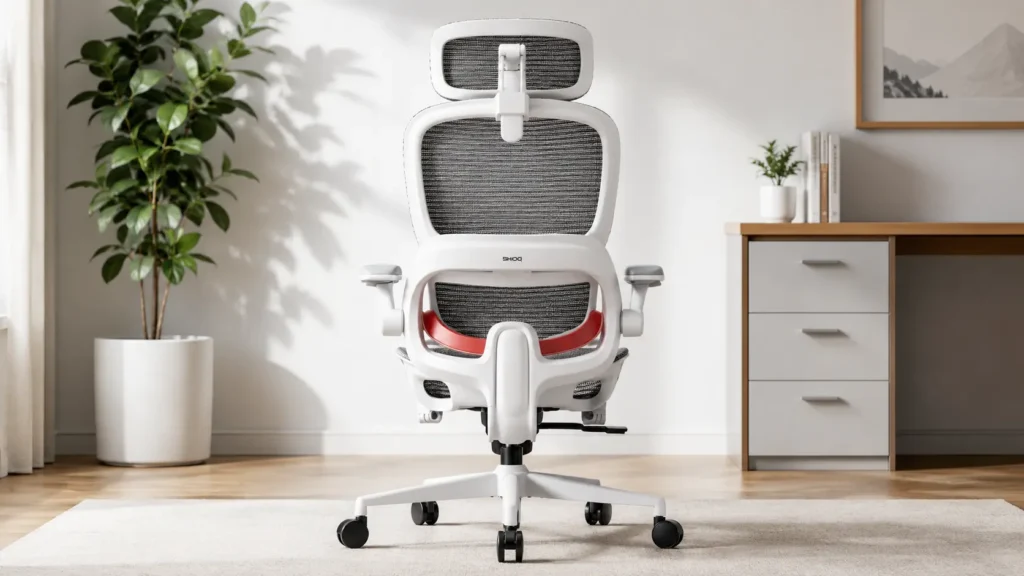
The SIHOO B100 features a split-back design. The upper and lower back sections move semi-independently to provide natural spinal support. It utilizes a continuous full breathable mesh backrest and a widened seat cushion to distribute weight across the hips.
The frame is built from durable polypropylene with a reinforced metal base. It relies on an SGS-certified Class 4 gas lift and supports up to 300 pounds. The overall weight is a manageable 39.9 pounds.
Real-World Performance & Comfort
The adaptive dynamic lumbar support operates brilliantly. It physically moves with your spine as you shift posture throughout the day. Whether you are in a forward lean, sitting upright, or fully reclined, the lumbar pad maintains contact with your lower back.
The 3-position recline lock clicks securely into 110, 125, or 135-degree angles. The widened seat cushion feels accommodating without being overly deep. The 3D flip-up armrests are height adjustable and fold flat when not in use, making desk storage very simple.
Ergonomic & Spinal Benefits (The Sizing Reality)
We highly recommend the B100 for users in the 5’2″ to 5’6″ range. The seat depth sits at 17.1 inches. This is slightly shorter than average and very thigh-friendly for this specific height bracket.
However, the minimum seat height is 18.3 inches. If you are under 5’3″ with shorter legs, your feet will likely dangle. When feet dangle, the pelvis tilts backward, and the lumbar curve collapses. To use this chair safely as a small computer chair with lumbar support, petite users absolutely must purchase a separate, angled ergonomic footrest to bridge the gap to the floor.
Build Quality & Limitations
SIHOO provides a strong 3-year warranty and a 30-day return window. The quiet casters perform flawlessly on both hardwood and carpet.
The main limitation is the lack of a built-in footrest combined with the 18.3-inch starting height. It is an exceptional value pick for ergonomics, provided the user recognizes they might need an aftermarket footstool to complete the setup.
Performance Metrics Table
| Feature Category | SIHOO B100 Specification | Ergonomic Impact for Short Users |
| Seat Depth | 17.1″ | Good. Thigh-friendly for users 5’2″ and taller. |
| Seat Height Range | 18.3″ – 21.9″ | Fair. Lower end fits most, but under 5’3″ requires a footrest. |
| Lumbar Support | Adaptive Dynamic | Excellent. Moves with the spine during postural shifts. |
| Backrest Design | Split-Back Mesh | Highly breathable, semi-independent movement. |
3. ELABEST T96 Mesh Office Chair
The ELABEST T96 targets the budget-conscious shopper who still demands solid ergonomic construction. It boasts a distinct aesthetic and heavily promotes its unique structural framing for shoulder support.
Product Overview
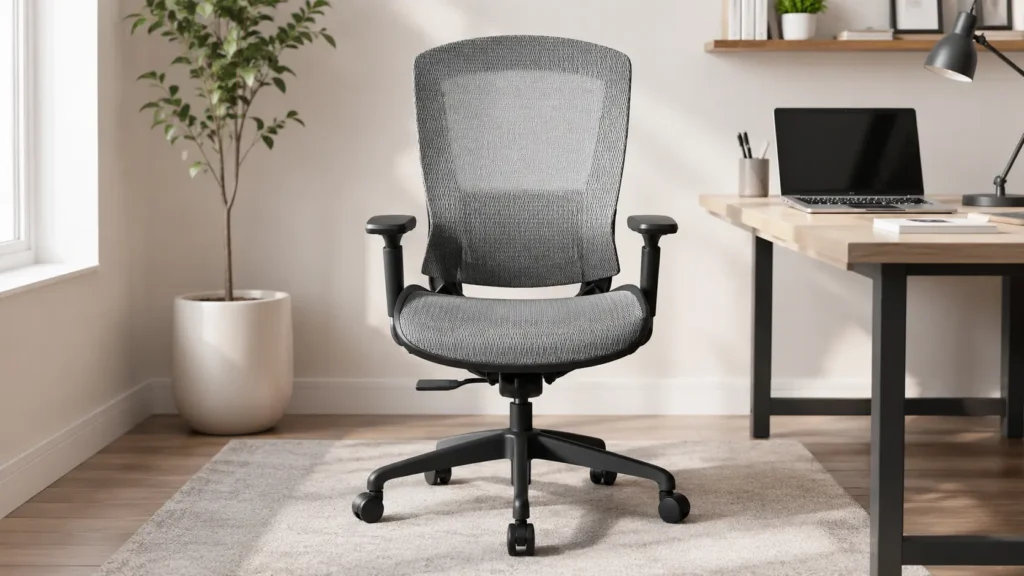
This is a full-mesh task chair featuring a Bionic curve backrest designed to mirror the spine’s natural S-curve. It utilizes a “Golden Triangle” shoulder support structure to alleviate upper body tension.
The chair is surprisingly light at just 36 pounds but supports a robust 300-pound weight capacity. It includes a nylon frame, a heavy-duty base, and BIFMA certification. It comes in a massive variety of colors including Charcoal, Dusty Sage, and Mocha.
Real-World Performance & Comfort
The high-grade, stretch-resistant full mesh maintains its shape exceptionally well over time. It provides maximum airflow for users who run hot during marathon work sessions.
The synchro-tilt mechanism features a tension adjustment knob and a 3-position lock. The 3D adjustable armrests are a major upgrade for this tier. They allow for height, width, and angle customization, which is crucial for narrower shoulders.
Ergonomic & Spinal Benefits (The Height Flaw)
The T96 offers practical everyday value for users between 5’4″ and 5’8″. The seat depth is a manageable 17.3 inches, which reduces thigh overhang nicely for this height group. The manual adjustable lumbar support provides solid, locked-in bracing.
Unfortunately, it fails the true petite test. The minimum seat height bottoms out at a staggering 19.6 inches. This is significantly higher than the other two models. Any user under 5’2″ will find their feet swinging in the air. Without a substantial external footrest, this chair will cause immediate lower back strain for very short frames.
Build Quality & Limitations
The assembly process requires standard tools but is straightforward. The smooth-rolling casters are hard-floor certified and do not scratch laminates.
The T96 is a highly functional mesh chair for the slightly taller short demographic. It is not specialized for true petite frames. The towering 19.6-inch minimum height is its glaring limitation for anyone under five feet four inches.
Performance Metrics Table
| Feature Category | ELABEST T96 Specification | Ergonomic Impact for Short Users |
| Seat Depth | 17.3″ | Manageable. Reduces overhang for users above 5’4″. |
| Seat Height Range | 19.6″ – 23.6″ | Critical Limitation. 19.6 inches is too tall for true petite frames. |
| Armrest Articulation | 3D Adjustable | Great. Width adjustability helps users with narrow shoulders. |
| Shoulder Support | Golden Triangle Structure | Reduces upper body tension effectively during focus work. |
Comprehensive Buying Guide: Engineering for Short Frames
Purchasing a small computer chair with lumbar support requires ignoring marketing buzzwords. Geometric measurements dictate comfort entirely. Check these core adjustments before you buy.
Minimum Seat Height
The pneumatic gas cylinder dictates exactly how close the seat gets to the floor. A user who is 5’0″ typically requires a seat height of 15.5 to 16.5 inches to plant their feet flat.
If a chair bottoms out at 18 inches, the feet will dangle. You must either purchase a heavy-duty, angled ergonomic footrest, or find a chair with a built-in retractable footrest to anchor your kinetic chain.
The Popliteal Clearance Rule (Seat Depth)
The seat pan is the physical surface bearing your weight. If this surface is too long, the rigid front edge strikes the soft tissue at the back of the knees.
This compresses the sciatic nerve. To compensate, short users slide forward, entirely abandoning the lumbar support. An ideal seat depth for someone 5’2″ or shorter ranges between 15.0 and 16.0 inches.
Armrest Articulation
Shorter individuals generally possess narrower shoulder spans. If armrests only adjust up and down, the user must splay their arms outward to reach the pads. This outward angle fires the trapezius muscles continuously.
A proper desk chair for a short frame must feature 3D or 4D armrests. The arm pads must pivot inward or adjust in width to allow elbows to hang naturally beneath the shoulders.
Frequently Asked Questions (FAQ)
What is the most important feature in an office chair for short legs?
Seat depth and minimum seat height are tied for priority. If the seat depth exceeds 17 inches, the front edge will cut off circulation. If the height exceeds 18 inches, your feet will dangle. You must prioritize geometry that matches your actual shin and thigh measurements.
How do I fix an ergonomic chair that is too tall for me?
Deploy a rigid, angled footrest under the desk. Soft pillows or foam blocks do not provide the necessary push-back resistance for pelvic stabilization. If your chair has a built-in footrest, extend it fully during seated tasks.
Why does my lower back hurt even when using an adjustable lumbar support?
Standard lumbar pads often hit the mid-back of a petite user instead of the lower back. This forces the spine out of alignment. You need a chair with a low-position lumbar system that targets the actual curve of the smaller torso.
Final Verdict
The biomechanical reality of the modern chair market is frustrating. Most brands simply do not accommodate petite frames correctly.
Based on intense dimensional evaluation, the CabeVibe CabLady S2 is the ultimate purpose-built choice for users under 5’3″. Its ultra-low 17.7-inch minimum seat height, shallow 15.7-inch seat depth, and fully integrated 15-inch footrest prove it was engineered specifically for small frames.
The SIHOO B100 remains the best value pick for users between 5’2″ and 5’6″. Its adaptive dynamic lumbar support offers incredible ergonomics at a mid-range price, provided you add an external footrest if you fall on the shorter end of that spectrum.
The ELABEST T96 is a highly practical everyday option for budget shoppers between 5’4″ and 5’8″. Its bionic curve mesh and 3D armrests deliver excellent support, but its 19.6-inch starting height makes it unusable for true petite frames.
Always measure your body first. Measure from the floor to the back of the knee, and from the back of the knee to the tailbone. Match those numbers to the chair specs before you buy.
Read More on Ergo Setup Lab:
Discover how to properly support the cervical spine in the comprehensive laboratory guide to the best ergonomic office chair with neck support.