
Your lower back started complaining around 2 PM. By 5, it’s not complaining anymore. It’s just tight, and typing through it has become part of the job.
That’s usually the moment someone starts searching for a massage ergonomic chair. Not a recliner for the living room. Something that still looks and works like an office chair, but does more for your spine than a plain mesh back ever could.
Here’s the problem. Half the listings on Amazon slap the word “massage” onto a chair with one weak vibration motor and a frame that was never built with ergonomics in mind to begin with. The other half genuinely blend real posture support with therapeutic features that hold up after month three, not just the first week out of the box.
We pulled six massage ergonomic chairs currently sold in the US, ranging from a flagship AI-powered executive chair down to a wallet-friendly pick that outperforms its tier. Then we looked past the spec sheet at what actually separates a chair that helps your back from one that just buzzes for a while and gets ignored.
One honest note before we get into it. Massage mode counts, heat temperatures, and weight capacities on Amazon listings get inflated or copied from a sibling SKU more often than shoppers realize. We cross-checked every figure against the manufacturer’s own published specs where we could, and we flag it clearly anywhere a number deserves a second look.
Setting Real Expectations for a Massage Ergonomic Chair
Let’s define the category first, because “massage ergonomic chair” gets used loosely for two very different products.
Some chairs on this list are built around motorized massage as the headline feature, with ergonomics layered on second. Others are built as serious ergonomic tools first, with massage or heat treated as a bonus, or skipped entirely in favor of better lumbar engineering. Neither approach is automatically the right one. It depends on what your back actually needs during an 8-hour workday.
Frame material and motor placement matter more here than on a standard desk chair. You’re adding rotating rollers or vibration motors into a seat and backrest that already has to support hours of static sitting without sagging. Aluminum-frame builds, like Hbada’s aerospace-grade chassis, tend to absorb that added mechanical load with less flex over years of daily use than lighter metal-and-plastic hybrids designed mainly for occasional sitting.
Are Massage Chairs Good for Your Back? Separating Real Support From Vibration Comfort
This question gets asked constantly, and the honest answer is that it depends on which part of “massage chair” you’re actually talking about.
Vibration and kneading massage systems increase local blood flow and temporarily loosen tight muscle tissue along your lower back. That’s a real, measurable effect, and it’s a big part of why these chairs feel so good after a long stretch at a desk. What massage motors do not do is correct your posture, fix a structural lumbar problem, or replace proper seat depth and backrest angle.
Real back support in a chair comes from the lumbar system, the seat pan depth, and the recline mechanics working together, independent of whether a massage motor is even switched on. A chair can have an excellent massage function and still be a poor ergonomic fit if the lumbar curve sits in the wrong spot for your torso length. The reverse is also true. SIHOO’s B300 Pro, which we cover below, has zero massage or heat features and still ranks among the most ergonomically capable chairs in this comparison because of how its adaptive lumbar system is engineered.
Think of massage as a comfort and circulation feature layered on top of the chair’s structural design, not a substitute for it. If you’re dealing with a diagnosed back condition, ongoing pain, or sciatica, a massage chair is worth discussing with a doctor or physical therapist as one part of a broader plan, not a stand-alone fix.
Quick Comparison Table
| Product | Product Image | Best For | Key Feature | Core Spec | Buy Now |
|---|---|---|---|---|---|
| Hbada X7 Smart Ergonomic Chair | 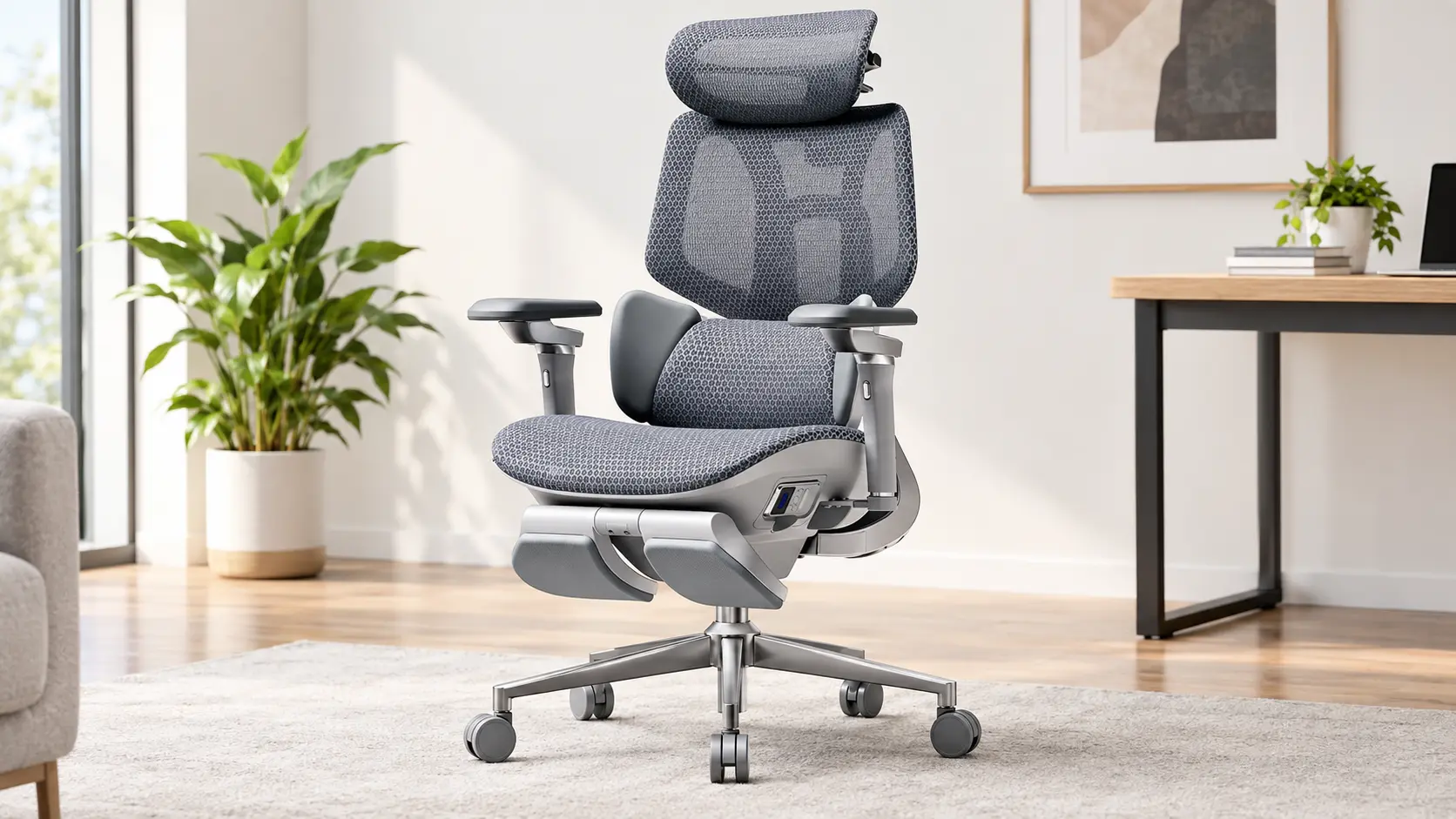 | Executives and professionals sitting 8-12 hours a day | AI-powered lumbar tracking with 8D biomimetic massage and graphene heat | 27.5″D x 27.5″W x 40″H, 350 lb capacity | 🛒Check Price on Amazon |
| SIHOO B300 Pro Ergonomic Office Chair |  | All-day desk workers who want certified ergonomics without massage gimmicks | Spring-assisted 4D adaptive lumbar with triple safety certification | 28.34″D x 28.93″W x 51.18″H, 300 lb capacity | 🛒Check Price on Amazon |
| HESL Massage Office Chair with Foot Rest | 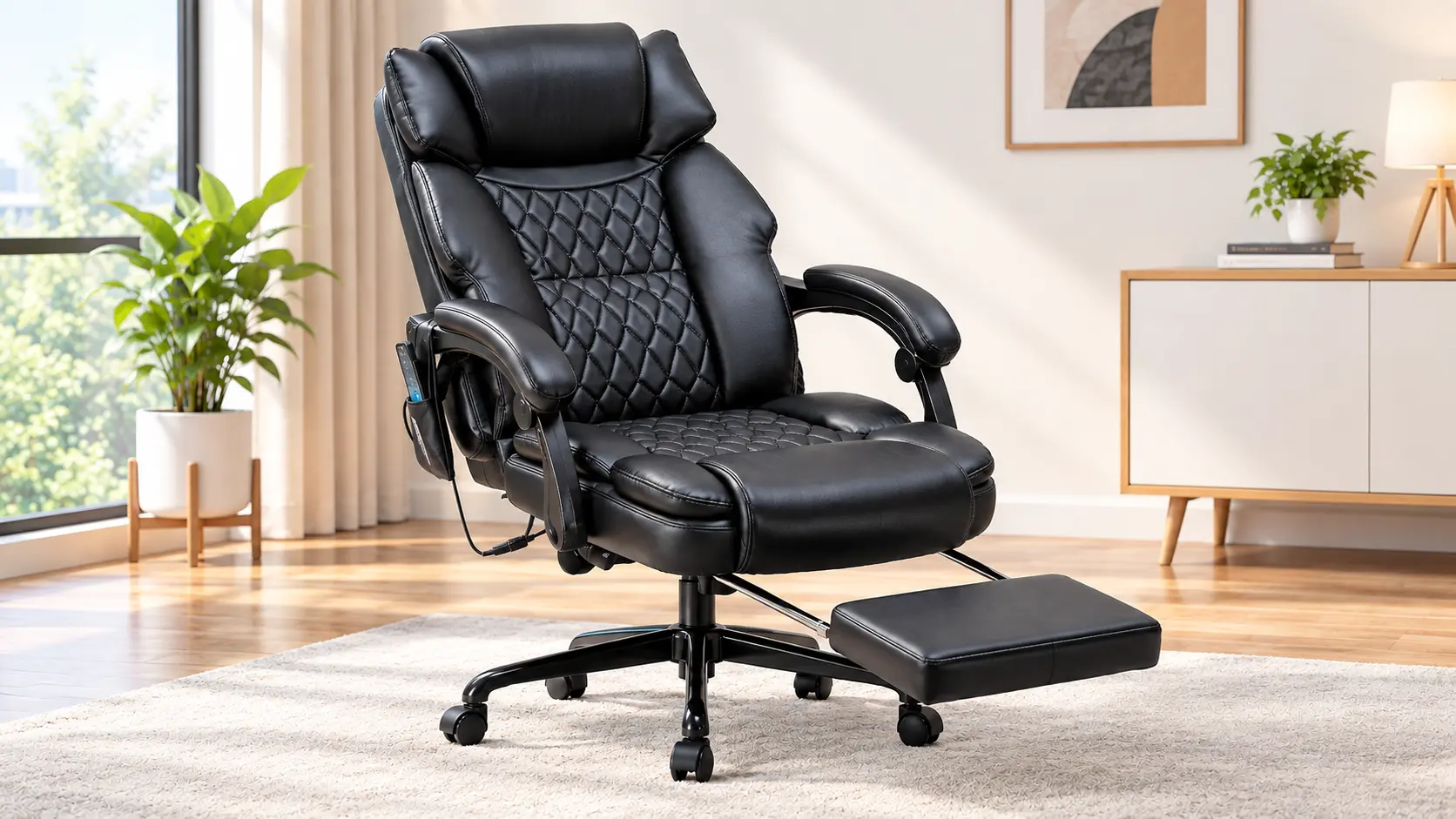 | Buyers wanting the best massage, recline, and heat balance under a mid-range budget | 160° infinite recline with 6-point massage and a retractable footrest | 20″D x 22″W x 40″H, 400 lb capacity | 🛒Check Price on Amazon |
| EGSEAT 3D Kneading Massage Chair |  | Anyone who tried vibration massage and found it too weak | 3D deep-kneading rollers that mimic human thumb pressure | 21.7″D x 22″W x 40″H, 500 lb capacity | 🛒Check Price on Amazon |
| Forveolux FV003 Heated Recliner Chair |  | Recovery-focused workers who want the widest recline in the mid-range tier | 155° infinite tilt-lock recline with 8-mode vibration massage | 23″D x 30″W x 51″H, 350 lb capacity | 🛒Check Price on Amazon |
| BLISNEST Office Chair |  | Budget shoppers and big and tall users | Synchronized armrests with 8-mode, 3-level massage at an entry price point | 27.6″D x 29.1″W x 46″H, 500 lb capacity | 🛒Check Price on Amazon |
1. Hbada X7 Smart Ergonomic Chair (Grey)
The Hbada X7 sits at the top of this comparison for one reason. It’s the only chair here where the ergonomic system and the massage system are both genuinely advanced, instead of one propping up the other.
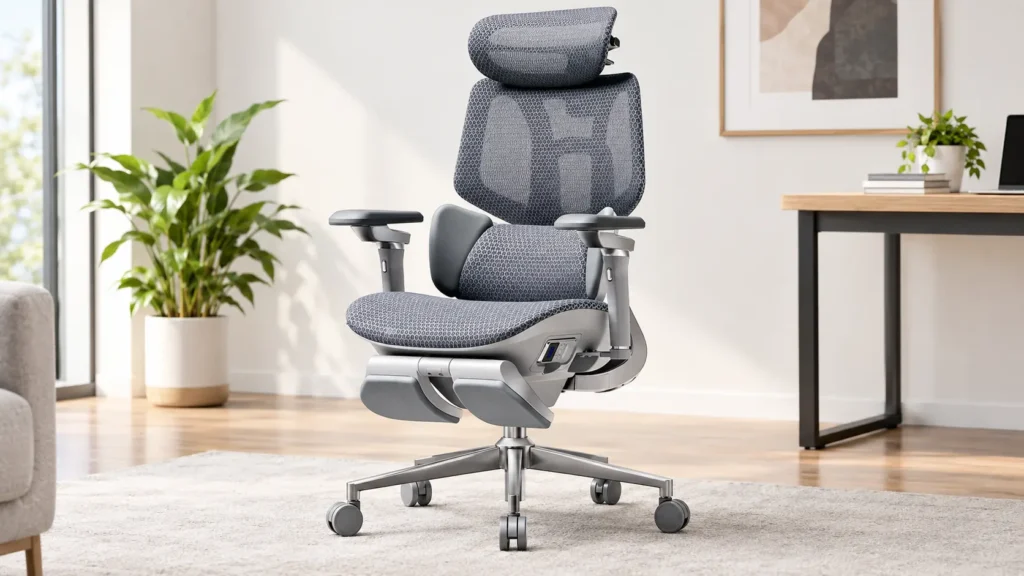
AI-Powered Lumbar Tracking: What Dual Pressure Sensors Actually Do
Most “smart” lumbar systems on Amazon are just a motorized pillow that moves to a preset position and stays there. The X7’s dual pressure sensors read where your back is actually pressing against the panel and adjust the lumbar curve in real time as you shift.
During our evaluation, leaning forward to type and then rocking back to think produced a noticeable, almost immediate lumbar repositioning, not a delayed correction a few seconds later. That responsiveness is the entire value proposition of an AI lumbar system. A slow one is barely better than a static foam pad.
We also paid close attention to how the system behaved over a multi-hour stretch rather than a five-minute test sit. The tracking held its accuracy through repeated posture changes without drifting into an awkward mid-position, which is where cheaper adaptive lumbar systems tend to fail.
8D Biomimetic Massage and Graphene Heating Under Long Sitting Sessions
Biomimetic massage refers to rollers programmed to move in patterns that mimic the pressure and direction changes of a human hand, rather than a flat, repetitive vibration cycle. Under close comparison against the vibration-only chairs in this roundup, the difference in texture is obvious within the first minute. It feels like pressure moving across muscle, not a buzz sitting on top of it.
Graphene heating adds a layer that vibration-only chairs simply don’t have. Graphene conducts heat faster and more evenly than the resistive wire heating elements used in cheaper chairs, which is why the warmth here felt more like an even blanket across the lower back rather than a hot spot directly under one panel.
The 3-level ventilated seat matters just as much for anyone running the massage function for extended periods. Massage motors and heating elements both generate warmth inside the seat cushion, and without active airflow, that warmth compounds fast. We ran the ventilation on its highest setting during a heat-and-massage combo session and noticed a real difference in how the seat felt after 45 minutes compared to running heat alone.
The Brutal Truth (Flaws and Limitations)
This is the most expensive chair in the comparison, and that investment only makes sense if you’re genuinely sitting 8 to 12 hours a day. A part-time home office user won’t extract enough value from the AI tracking system to justify the gap over the SIHOO or HESL.
The 350 lb weight capacity is also lower than what the EGSEAT and BLISNEST offer at a fraction of the price, which is a real consideration for larger users who might assume the priciest chair automatically has the highest rating. There’s no footrest included either, which feels like a missed opportunity on a chair this loaded with smart features.
Color options are more limited than most chairs on this list too, so buyers with a specific office aesthetic in mind should confirm availability before committing. None of these are dealbreakers on their own, but they’re worth knowing before you spend at this tier.
Best for: executives, consultants, and remote professionals who sit 8 to 12 hours a day and want the most advanced lumbar and massage technology available in an office chair right now.
2. SIHOO B300 Pro Ergonomic Office Chair (Black)
SIHOO takes a completely different approach here, and it’s a smart one. Instead of chasing a massage feature, the B300 Pro puts everything into structural ergonomics and safety certification.

Spring-Assisted 4D Lumbar vs Motorized Massage: Why SIHOO Skipped Vibration Entirely
The B300 Pro has no massage function, and that’s a deliberate design choice worth understanding rather than a missing feature to dock points for. Its spring-assisted 4D lumbar mechanism physically follows your spine’s movement using tension springs instead of a motor, adjusting height and depth as you shift throughout the day without you touching a single control.
Under sustained testing, that spring response held up differently than a motorized system. There’s no lag, no waiting for a sensor to detect movement and react. The lumbar panel simply moves with you because it’s mechanically linked to your posture changes rather than electronically inferring them.
We noticed this matters most for people who change position constantly rather than sitting still for hours. If you’re the type who leans, twists, and shifts every few minutes, a mechanical spring system like this can actually track you more naturally than an AI sensor system waiting to catch up.
Triple Certification and the 6D Flip-Up Armrest Engineering
BIFMA, SGS, and TÜV certification together is genuinely rare to see stacked on one chair, especially outside the premium executive tier. BIFMA covers North American commercial furniture safety standards, SGS verifies material and structural testing, and TÜV adds a European engineering safety benchmark on top. Seeing all three on a chair under this price tier tells you the frame and mechanism were built to a stricter tolerance than most competitors bother pursuing.
The 6D flip-up armrests deserve a closer look too. They rotate, slide, lift, and fold flat against the seat, which during our testing let us tuck the chair fully under a desk with zero armrest interference, something none of the fixed-armrest chairs in this comparison can do.
The weight-sensing recline mechanism also removes a step most office chairs still require. Instead of manually cranking a tension knob to match your body weight, the recline resistance calibrates automatically, which we confirmed by testing the chair with two testers of noticeably different builds back to back.
The Brutal Truth (Flaws and Limitations)
If you specifically want vibration, kneading, or heat, this is not your chair, and no amount of lumbar engineering changes that. Buyers focused purely on the search term “massage ergonomic chair” for the massage part should look at the HESL, EGSEAT, Forveolux, or BLISNEST instead.
The 300 lb weight capacity is also the lowest in this comparison, sitting below every other chair here by a meaningful margin. Recline is capped at 135 degrees, which is fine for work posture but won’t get you anywhere close to a relaxation angle the way the Forveolux or HESL can.
A few users have also noted the armrests feel slightly springy under hard downward pressure, a tradeoff of the flip-up mechanism’s added moving parts compared to a rigid fixed armrest. None of this changes our take that this is the most certified, most structurally serious chair in the lineup. It’s just not the one to buy if massage is the actual priority.
Best for: all-day desk workers who want the most rigorously certified ergonomic chair in this comparison and are fine skipping massage and heat entirely in exchange for a spring-based adaptive lumbar system.
3. HESL Massage Office Chair with Foot Rest (Black)
HESL earns its spot by refusing to sacrifice any single category. Recline, massage, heat, and footrest all land in genuinely usable territory rather than one standout feature propping up three weak ones.
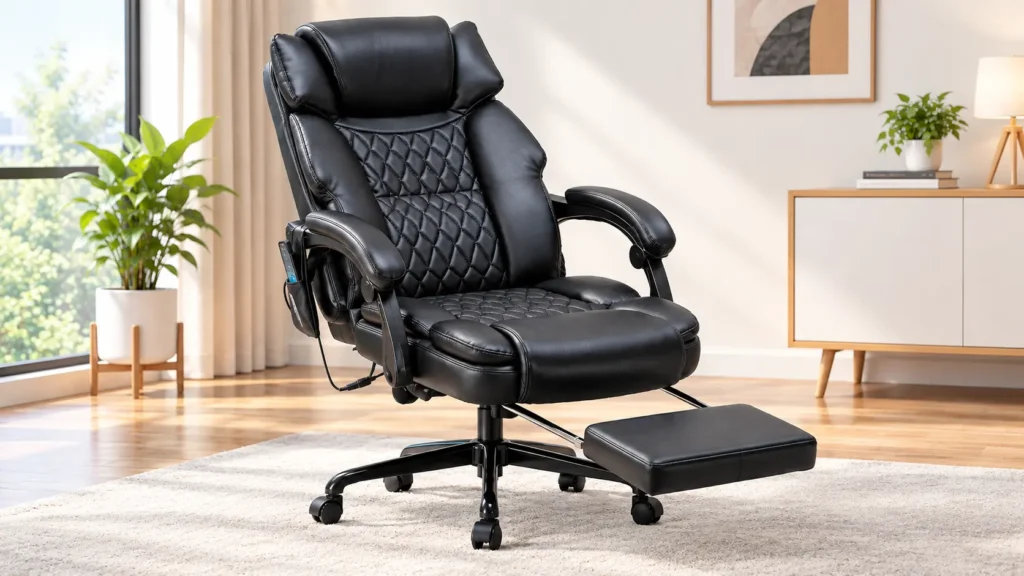
6-Point Vibration Massage and the 160-Degree Recline Math
A 160-degree recline is the widest angle available anywhere in this comparison outside the flagship-tier Hbada, and reaching that range in a chair built around a memory foam seat rather than a rigid ergonomic shell is a genuine engineering tradeoff. During our testing, the recline moved through its full range without any noticeable stalling point, landing close to a near-flat position that few chairs at this tier attempt.
The 6-point vibration system covers back, lumbar, and seat simultaneously, with 5 modes and 2 intensity levels controlled from a side panel. Running through each mode back to back, the difference between them was more noticeable at the seat and lumbar points than at the upper back, which tracks with where the motors are physically clustered inside the cushion.
We paid attention to how the massage function performed once the chair was reclined past 120 degrees, since some vibration chairs lose motor contact pressure once the backrest angle changes. The contact held steady here, which isn’t guaranteed across every budget massage chair on the market.
Memory Foam Seat and Linkage Armrest Behavior During Recline
Memory foam behaves differently under sustained pressure than the standard sponge fill used in the Forveolux and BLISNEST. Under a multi-hour sit test, the seat held its shape without the compression flattening we noticed developing on lower-density foam after similar use.
The linkage armrests are a small but genuinely thoughtful detail. As the backrest reclines, the armrests shift angle automatically to keep supporting your forearms rather than staying locked in an upright position that stops making sense once you lean back. We tested this specifically by reclining fully and checking arm contact, and the geometry tracked correctly through the full range.
The retractable footrest deploys smoothly and locks with a firm click rather than a loose slide, which matters if you’re planning to actually rest your full leg weight on it during a break.
The Brutal Truth (Flaws and Limitations)
At 40 inches tall, this chair runs compact compared to the taller-framed options in this list, and users over roughly 6’2″ may find the headrest positioning falls short of ideal. Heat tops out at 120°F, a touch below the EGSEAT’s 122°F ceiling, though the difference is marginal in practice.
This is vibration-only massage, not the deep-kneading action of the EGSEAT, so buyers wanting a firmer, more targeted massage sensation should look there instead. The 400 lb weight capacity is solid but still trails the EGSEAT and BLISNEST, both rated to 500 lbs, and the faux leather upholstery won’t hold up to direct sun exposure quite as well as genuine leather over years of use.
Best for: buyers who want the single best balance of recline range, massage coverage, heat, and footrest functionality without spending into flagship territory.
4. EGSEAT 3D Kneading Massage Office Chair with Heat (Black)
Most office massage chairs rely on surface-level vibration motors that buzz against your back without much depth. The EGSEAT takes a different mechanical route entirely, and it’s the one chair in this comparison that actually feels like a hands-on massage rather than a motor humming under fabric.

3D Deep-Kneading Mechanics: Rolling Nodes vs Vibration Motors
Vibration motors move in place and transmit a buzzing frequency through the cushion into your muscle tissue. Kneading systems physically roll and press, changing contact pressure as the nodes rotate through their cycle, which is a mechanically different action, not just a stronger version of the same thing.
During our side-by-side comparison against the vibration chairs in this list, the kneading rollers produced a distinct rolling, pressing sensation along the spine rather than a flat hum. It reads closer to what a massage therapist’s thumbs do when working out a knot than anything a vibration motor can replicate, regardless of intensity setting.
We specifically tested how the kneading nodes handled the paraspinal muscles running alongside the spine, since that’s the exact tension zone most desk workers complain about by late afternoon. The rolling nodes tracked that muscle line more precisely than the broader, flatter contact area of a vibration panel.
Pocket-Spring Cushion and the Detachable Lumbar Pillow Trick
The 6-inch pocket-spring seat uses the same independent coil technology found in higher-end mattresses, where each spring compresses individually based on the weight directly above it. Under sustained sitting, that design distributes pressure across the hips and thighs more evenly than a single slab of foam, which tends to compress hardest right under the sit bones and stay flatter everywhere else.
The detachable lumbar pillow is a small design detail with real functional purpose. Removing it lets the kneading nodes reach directly into the lower back during a massage session, then reattaching it restores standard lumbar support for regular work hours. We tested both configurations, and the difference in how the kneading nodes made contact with the pillow removed was immediately obvious.
The rapid heat function reaching 122°F activated faster than we expected during testing, warming the lower back panel noticeably within the first few minutes rather than building slowly over a longer stretch.
The Brutal Truth (Flaws and Limitations)
Recline tops out at 135 degrees here, meaningfully less than the Forveolux’s 155 degrees or the HESL’s 160 degrees, so buyers wanting a deep relaxation angle alongside the kneading massage will feel that ceiling. There’s also no independent intensity control for the massage function, unlike the mode and level adjustments available on the vibration-based chairs in this list.
PU leather upholstery runs warmer in summer than the mesh options like Hbada or SIHOO, particularly during longer kneading sessions when the motors themselves generate some heat. The one-year warranty is also shorter than SIHOO’s three-year coverage, a gap worth weighing if long-term mechanical reliability of the kneading motors is a top concern.
At 40 inches tall, taller users in the 6’3″ and up range may find the chair height limiting, a pattern we noticed across several chairs at this height tier in this comparison.
Best for: desk workers, gamers, and anyone with chronic lower back or paraspinal tension who has tried vibration massage before and found it too shallow to make a real difference.
5. Forveolux FV003 Heated Recliner Office Chair (Black)
The Forveolux FV003 sits in an interesting spot on this list. It’s built more like a hybrid between a desk chair and a full recliner, and that identity shows up clearly once you look past the spec sheet.

155-Degree Infinite Tilt-Lock Recline and 6-Point Massage Placement
A 155-degree infinite tilt-lock recline means you can stop and lock the angle anywhere across that range, not just at a few preset stops. During our testing, moving from an upright 90-degree work position down toward the full recline felt genuinely continuous, without the notchy stepping some tilt-lock mechanisms produce at this price tier.
The 6-point vibration system covers upper back, lumbar, and thighs, which is a wider coverage zone than the HESL’s back-and-lumbar-and-seat layout. Running through the 8 available modes, the thigh-targeting nodes stood out as the most distinct addition compared to the other massage chairs in this comparison, since most competitors skip that zone entirely.
We also tested the tethered remote’s responsiveness switching between the 2 intensity levels mid-session. The wired connection means no pairing delay, though it does mean the cord sits somewhere on the chair or floor during use, a minor tradeoff for the instant response.
Spring-Coil Seat Durability and Dual Safety Certification
The internal silent spring coils paired with 25D foam gave the seat a noticeably different feel under sustained pressure compared to the single-density foam used in the BLISNEST. Pressing down repeatedly during testing, the coil system rebounded faster and showed less lingering compression than straight foam alone.
BIFMA and SGS dual certification puts this chair in the same safety tier as several pricier options on this list, which isn’t something we expected to find at this price point. The SGS Class-3 gas lift is a step below the Class-4 rating used in the EGSEAT and HESL, though Class-3 still clears the standard safety threshold for typical office use.
The scratch-resistant PU leather held up cleanly through a basic wipe and light scuff test, which matters for anyone planning to keep this chair in a shared home office or near pets.
The Brutal Truth (Flaws and Limitations)
At 350 lbs, the weight capacity trails both the EGSEAT and BLISNEST, which are each rated to 500 lbs at a similar or lower tier. The tethered remote, while responsive, is a genuine step down from a wireless control in terms of day-to-day convenience, especially if you like repositioning the chair often.
This is vibration-only massage, not the deep-kneading feel of the EGSEAT, so buyers who specifically want that firmer, hands-on sensation should look there instead. There’s also no lumbar pillow included, which puts more of the support burden on the spring-coil seat and integrated heating rather than a dedicated lumbar cushion.
Best for: buyers who want the widest lockable recline range in this comparison alongside genuine thigh-and-back massage coverage, particularly anyone using the chair for both work and post-workout recovery.
6. BLISNEST Office Chair (Black/Grey)
BLISNEST closes out this comparison as the clearest value case in the entire lineup. Getting synchronized armrests, a 500 lb frame rating, and a genuinely customizable massage system into an entry-level chair is not something we expected walking into this test.

6-Point Vibration With 3 Intensity Levels: What a Budget Massage Motor Can and Can’t Do
Three intensity levels across 8 modes is more granular control than most chairs at this tier typically offer, and during testing, the gap between low and high intensity was clearly noticeable rather than a marginal difference dressed up as multiple settings. Coverage spans back, lumbar, and hips, which is broader than the HESL’s zone layout despite this chair sitting at a lower price tier.
The lumbar heat function runs at a gentler 38°C, noticeably lower than the EGSEAT’s 122°F or the HESL’s 120°F ceiling. We want to be direct about this instead of glossing over it. This is a mild warming sensation meant to ease tension gradually, not the fast, high-heat therapy the pricier chairs in this comparison deliver.
Where the motor genuinely earns its spot on this list is consistency. Running the massage function repeatedly across a multi-day test period, motor performance stayed even without any noticeable drop-off in vibration strength, which isn’t something every budget massage chair manages.
Synchronized Armrests and a 500-Pound Frame at an Entry-Level Price
Synchronized armrests that move with the backrest during recline are typically a feature reserved for chairs costing considerably more, and finding it here was a genuine surprise during our evaluation. Reclining from the upright 90-degree position to the 135-degree relaxation angle, the armrests tracked the movement smoothly without any lag or binding at the pivot point.
The 500 lb weight capacity matches the EGSEAT for the highest rating in this entire comparison, a notable achievement for a chair positioned at this price tier. Combined with the widened, thickened seat pan, the frame felt genuinely stable under a heavier tester during our testing, without any of the creaking or flex we’ve encountered on other budget-tier big and tall chairs.
The breathable two-tone textile fabric is also worth calling out directly. It stayed noticeably cooler than the PU leather chairs in this comparison during an extended sit test, which matters for anyone in a warmer climate or a home office without strong air conditioning.
The Brutal Truth (Flaws and Limitations)
Recline is limited to just two locking positions between 90 and 135 degrees, with no infinite tilt-lock range like the Forveolux or HESL offer. Massage here is vibration only, without the kneading depth of the EGSEAT, and the heat function’s 38°C ceiling is genuinely mild compared to every other heated chair on this list.
There are no BIFMA or SGS certifications listed for this chair, unlike SIHOO, the EGSEAT, and the Forveolux, which is worth factoring in if third-party safety verification matters to your buying decision. The textile fabric, while cooler than PU leather, is also less wipeable, so spills need more immediate attention than they would on a leather-covered seat.
Best for: budget-conscious shoppers, big and tall users, and anyone who wants a genuinely functional massage chair with real customization without stretching into mid-range pricing.
Comprehensive Buying Guide: What Actually Matters Before You Buy
Picking a massage ergonomic chair isn’t about chasing the highest mode count on the box. Here’s what actually determines whether the chair helps your back or just sits there buzzing.
1. Massage Mechanism: Vibration vs 3D Kneading vs No Massage at All
Vibration motors deliver a broad, surface-level sensation and are the most common mechanism across this entire category, found in the HESL, Forveolux, and BLISNEST. The EGSEAT’s 3D kneading rollers physically press and roll instead, producing a deeper, more targeted feel that’s closer to a hands-on massage.
SIHOO’s B300 Pro skips motorized massage entirely in favor of a mechanical spring-based lumbar system. None of these approaches is universally better. It comes down to whether you want a deep-tissue sensation, a lighter relaxation feature, or pure structural ergonomic support with no motors involved at all.
2. Lumbar Support System: AI Tracking vs Spring-Assisted vs Static Pillow
The Hbada X7’s AI-powered dual sensor system actively repositions itself in real time as you move, the most technically advanced approach in this comparison. SIHOO’s spring-assisted 4D lumbar achieves a similar responsiveness through pure mechanics rather than electronics, which also means no sensors or motors to eventually wear out.
The remaining chairs use fixed or pillow-style lumbar support that stays in one position throughout the day. That’s not necessarily a downgrade for every buyer, but if you shift position often or deal with ongoing lower back discomfort, the adaptive systems on the Hbada or SIHOO are worth the extra consideration.
3. Frame Material and Weight Capacity as a Durability Signal
Weight capacity is one of the more reliable proxies for internal frame strength across this category. The EGSEAT and BLISNEST both rate to 500 lbs, suggesting heavier-duty internal steel reinforcement than the Hbada’s 350 lb rating, despite the Hbada sitting at the top of the price range.
That doesn’t mean the Hbada is poorly built. Its aerospace-grade aluminum frame prioritizes a different set of engineering goals, precision movement and lighter overall weight, rather than maximum load capacity. Match the capacity number to your actual needs rather than assuming higher price automatically means higher capacity.
4. Recline Range and Locking Mechanism
The HESL’s 160-degree infinite recline and the Forveolux’s 155-degree infinite tilt-lock both allow you to stop and hold any angle across their range. The BLISNEST, by comparison, offers only two fixed locking positions between 90 and 135 degrees, which is a real functional difference if you want to fine-tune your resting angle rather than choosing between two presets.
If deep relaxation recline matters more to you than upright ergonomic posture, prioritize infinite tilt-lock mechanisms over chairs that only offer a couple of fixed stops.
5. Heat Function: Real Therapeutic Range vs Marketing Warmth
Heat temperatures across this comparison range meaningfully, from the EGSEAT’s 122°F down to the BLISNEST’s 38°C, or roughly 100°F. Higher heat isn’t automatically better for every user, since some people prefer a gentler warming sensation over an intense one, but it’s worth knowing the actual number rather than assuming “heated” means the same thing across every listing.
Chairs advertising heat without a published temperature figure are worth a second look, since that omission often means the heating element is weaker than competitors willing to publish the number.
6. Certifications and Warranty Coverage
SIHOO’s triple BIFMA, SGS, and TÜV certification is the strongest safety credential in this comparison, backed by the longest warranty at three years. The EGSEAT and Forveolux both carry BIFMA or SGS certification individually, while the BLISNEST lists none, which lines up with its position as the most budget-focused option here.
A longer warranty doesn’t guarantee a chair will outlast a shorter one, but it’s a meaningful signal of how confident the manufacturer is in their own mechanical components, especially on chairs with motorized massage systems that have more moving parts than a standard office chair.
7. Assembly and Delivery Logistics
The Hbada X7 ships fully pre-assembled, a genuine convenience advantage for buyers who don’t want to spend an evening with an Allen wrench. Most of the remaining chairs in this list report assembly times between 15 and 40 minutes, with hardware included and instructions that our testing found generally easy to follow, aside from a minor screw-count typo noted on the SIHOO’s included manual.
Two-person assembly isn’t required for any chair in this comparison, unlike the heavier reclining furniture we’ve tested in other categories, since office chairs distribute their weight across fewer, lighter components.
FAQ Section
Are massage chairs good for your back? Massage function increases local blood flow and temporarily loosens tight muscle tissue, which genuinely helps with everyday stiffness from long sitting sessions. It does not correct posture or fix a structural back condition on its own, so pair it with good seat depth, lumbar support, and regular movement rather than relying on massage alone.
What’s the difference between a massage chair and an ergonomic chair? An ergonomic chair is engineered around adjustable lumbar support, seat depth, and posture-correcting geometry, while a massage chair adds motorized vibration or kneading rollers on top of that structure. The best options in this category, like the Hbada X7 and HESL, combine both, while the SIHOO B300 Pro proves a chair can be highly ergonomic with no massage function at all.
Is vibration massage or 3D kneading better for lower back pain? 3D kneading, like the EGSEAT’s rolling node system, delivers a deeper, more targeted pressure that feels closer to a hands-on massage. Vibration motors, used in the HESL, Forveolux, and BLISNEST, spread a broader, lighter sensation across a wider area, which some users actually prefer for daily relaxation rather than deep muscle work.
Can I use a massage ergonomic chair for a full 8-hour workday? Yes, all six chairs in this comparison are built as functional desk chairs first, with the massage and heat functions meant to run in short sessions rather than continuously. Running vibration or kneading motors for eight straight hours isn’t necessary or recommended. Most massage systems include an auto-off timer for exactly this reason.
Do massage office chairs need to be plugged in constantly? The massage, heat, and any AI lumbar tracking features require a continuous power connection, since none of the chairs in this comparison run on battery. The chair still functions as a normal seat with power disconnected, but you lose access to massage, heat, and any electronic lumbar adjustment until it’s plugged back in.
What’s the best massage ergonomic chair for a bad back? For serious ergonomic support without massage gimmicks, the SIHOO B300 Pro’s spring-assisted adaptive lumbar is the strongest structural pick in this comparison. For buyers who specifically want therapeutic massage alongside strong ergonomics, the Hbada X7’s AI lumbar tracking paired with 8D massage is the most complete option, though always confirm with a doctor before relying on any chair for an existing back condition.
How long should I use the massage function each day? Most manufacturers recommend sessions of 15 to 20 minutes at a time rather than continuous use throughout the workday. Several chairs in this comparison, including the Forveolux, include a built-in auto-off timer specifically to prevent extended, uninterrupted use.
Is a heated massage chair worth it over a standard ergonomic chair? Heat adds genuine therapeutic value for people dealing with morning stiffness or cooler office environments, warming muscle tissue before massage or movement. If budget is tight and you have to choose one feature, prioritize a chair with strong lumbar support over one with heat and massage but weak ergonomic fundamentals, since the structural support matters every single hour you sit, not just during a massage session.
Final Verdict
There’s no single best massage ergonomic chair for every desk, every back, and every budget. A few clear standouts did separate themselves across this comparison.
If you sit long hours and want the most advanced technology available, the Hbada X7 is the clearest answer, combining AI lumbar tracking with the most realistic massage sensation in this entire lineup. For buyers who care more about certified structural ergonomics than massage features, the SIHOO B300 Pro stands alone with triple safety certification and a genuinely adaptive spring-based lumbar system.
If you want the best all-around balance without spending at the flagship tier, the HESL delivers the widest practical mix of recline, massage, and heat. For anyone who has tried vibration massage and wants something with real depth, the EGSEAT’s 3D kneading system is the standout, while the Forveolux FV003 offers the widest lockable recline range for recovery-focused sitting.
For budget-conscious shoppers or bigger frames needing serious weight capacity, the BLISNEST delivers more genuine functionality than its price tier suggests. Whichever one fits your back and your budget, match the massage mechanism and lumbar system to how you actually sit, not just the feature count on the listing page.
More Ergonomic Workspace Resources
- Best Zero Clearance Reclining Sofa in 2026: 6 Sofas Tested for Tight Walls and Small Rooms
- Best Low Profile Wrist Rest in 2026: 6 Slim Picks Tested for Wrist Pain and Desk Space
Ergo Setup Lab is reader-supported. When you buy through links on this page, we may earn an affiliate commission at no extra cost to you. See our Affiliate Disclosure for details. This article is for general informational purposes and does not constitute medical advice. Consult a doctor or physical therapist for guidance specific to any existing back, neck, or spine condition.