
If your hands ache by the second row, you already know exactly which motion does it. That tight pinch grip between thumb and forefinger, repeated a few thousand times an hour, is what turns a relaxing hobby into something your knuckles complain about the next morning.
For a lot of crocheters, it starts small. A little stiffness after a long project. Then it’s swelling in the thumb joint by evening. Then it’s putting the hook down mid-row because your hand just won’t cooperate anymore.
We get it, and we also get that most people typing “ergonomic crochet hooks” into Google aren’t trying to build a hundred-dollar hook collection just to test a theory. You want something that actually reduces the pinch force on your joints, without gambling your budget on a set that turns out to be the same rigid aluminum stick with a foam sleeve glued on top.
So that’s what this guide does. We pulled six crochet hook sets currently sold on Amazon that specifically market ergonomic handle design for hand pain, arthritis, and wrist fatigue, then looked past the packaging claims to the actual mechanics. How the handle shape changes your grip. What the hook tip does to stitch-catching force. Where the size range helps or leaves you short, and where each set cuts a corner you won’t notice until you’ve logged fifty hours with it.
One honest note before we start. No crochet hook, no matter how soft the handle, treats arthritis or carpal tunnel syndrome. What a well-designed hook can do is lower the mechanical strain your hand absorbs during each stitch. If your pain is severe, getting worse, or comes with numbness that lingers after you put the yarn down, that’s a conversation for a hand specialist or occupational therapist, not a shopping guide.
Setting Real Expectations for Ergonomic Crochet Hooks
Let’s talk about what “ergonomic” actually means on a crochet hook, because the word gets stamped on packaging that hasn’t earned it.
Every hook on this list is built from the same two components: a shaft that does the stitching and a handle that your hand actually grips for hours. What separates a hook that genuinely reduces joint strain from one that just feels nice in the store comes down to three mechanical factors. How the handle shape distributes grip pressure across your palm instead of concentrating it at the fingertips. How much force the tip needs to catch yarn cleanly on the first pass. And how the hook’s overall weight and balance behave once your hand has been holding it for an hour straight, not the first thirty seconds.
None of the six sets here are magic. A soft rubber sleeve wrapped around a standard-diameter shaft helps a little, but it’s a different category of engineering than a handle that’s been reshaped to change where the load actually sits in your hand. That distinction matters more than most product listings let on, and we’ll flag it product by product.
Handle material also isn’t a one-size-fits-all answer. Elastomeric rubber, the kind Tulip and Clover use, is soft and warms up against your skin quickly, which helps blood flow to inflamed joints during long sessions. Bamboo, ChiaoGoo’s material of choice, is lighter and has a natural grip texture without needing a rubber coating, though it behaves differently in humid conditions. Molded plastic, like addi uses, can be shaped into more aggressive ergonomic curves than rubber allows, but it doesn’t have the same give under pressure.
One more honest note. A few of these listings use phrases like “arthritis-friendly” or “reduces hand fatigue” without citing any independent clinical testing behind those claims. Treat that language as a directional description of design intent, not a verified medical outcome. We’ll point out where that distinction actually matters as we go through each set.
Quick Comparison Table
| Product | Product Image | Best For | Key Feature | Core Spec | Buy Now |
|---|---|---|---|---|---|
| Tulip Etimo Rose Crochet Hook Set | 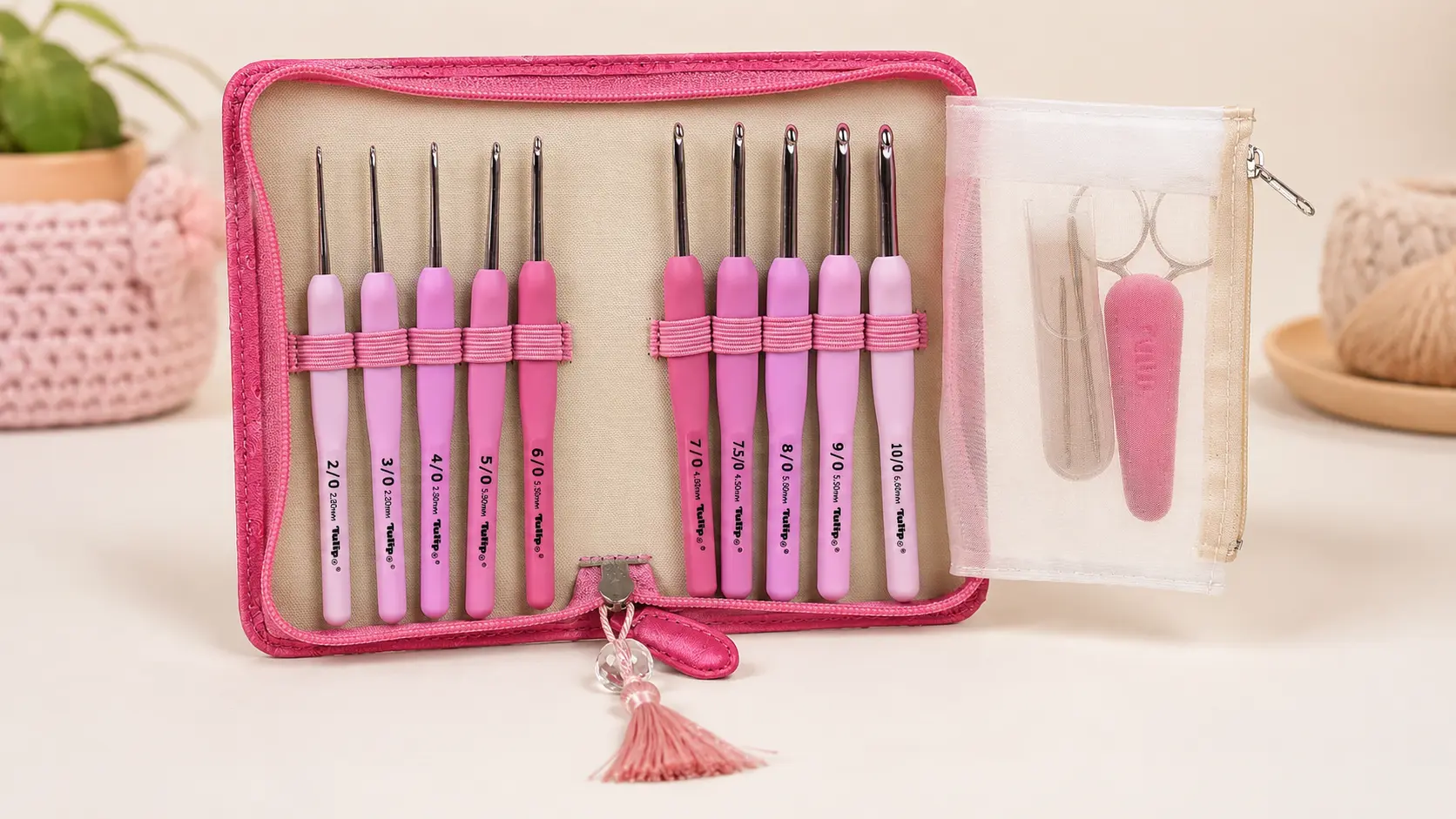 | Best premium all-rounder, softest handle feel | Elastomeric rubber grip on all 10 hooks | 2.00mm–6.00mm, aluminum shaft | 🛒Check Price on Amazon |
| ChiaoGoo T-Spin Tunisian Interchangeable Set | 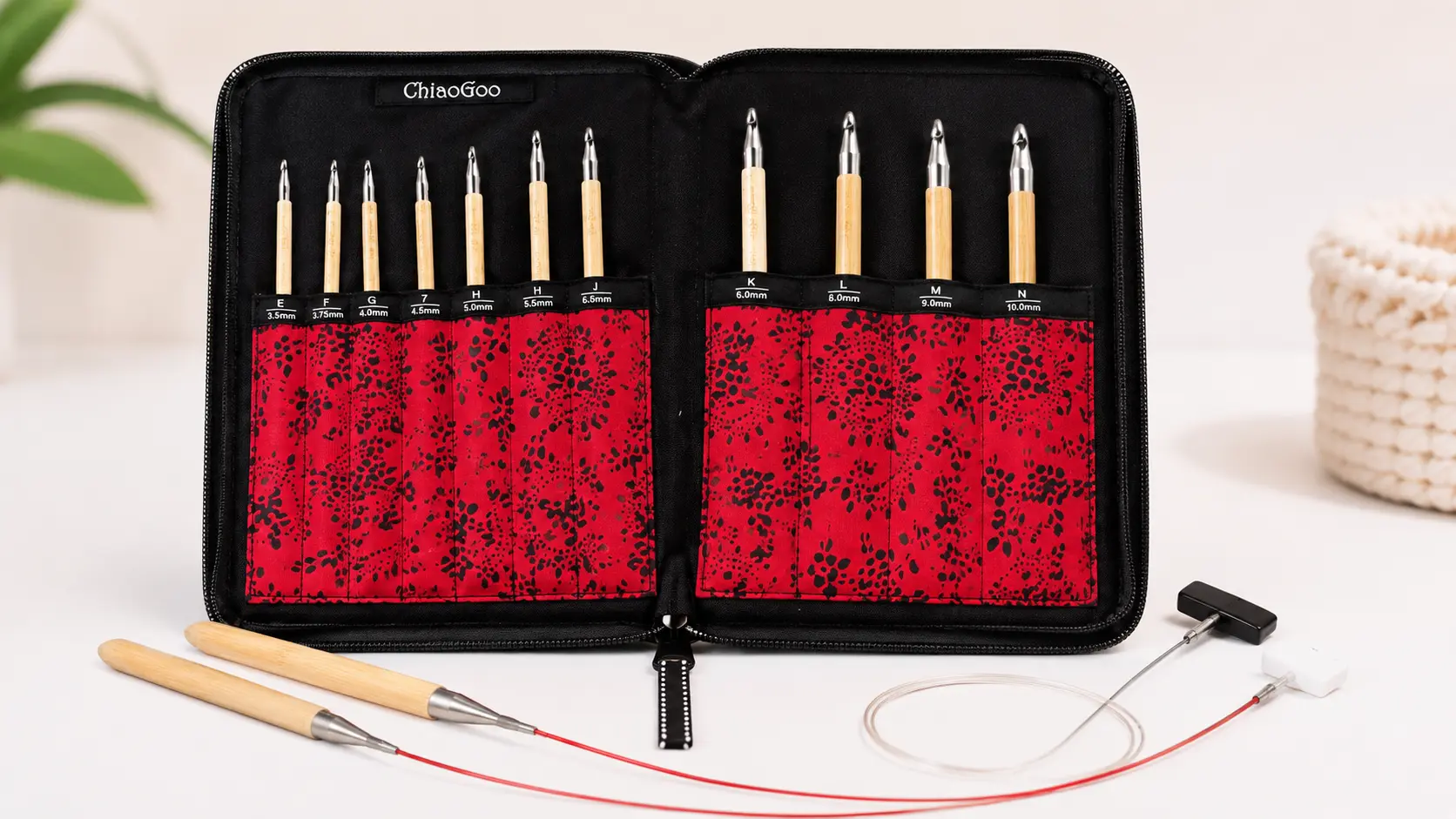 | Advanced Tunisian crochet specialists | Interchangeable bamboo hooks + memory-free cables | US E–N, laser-marked bamboo | 🛒Check Price on Amazon |
| addi Swing Set of 11 | 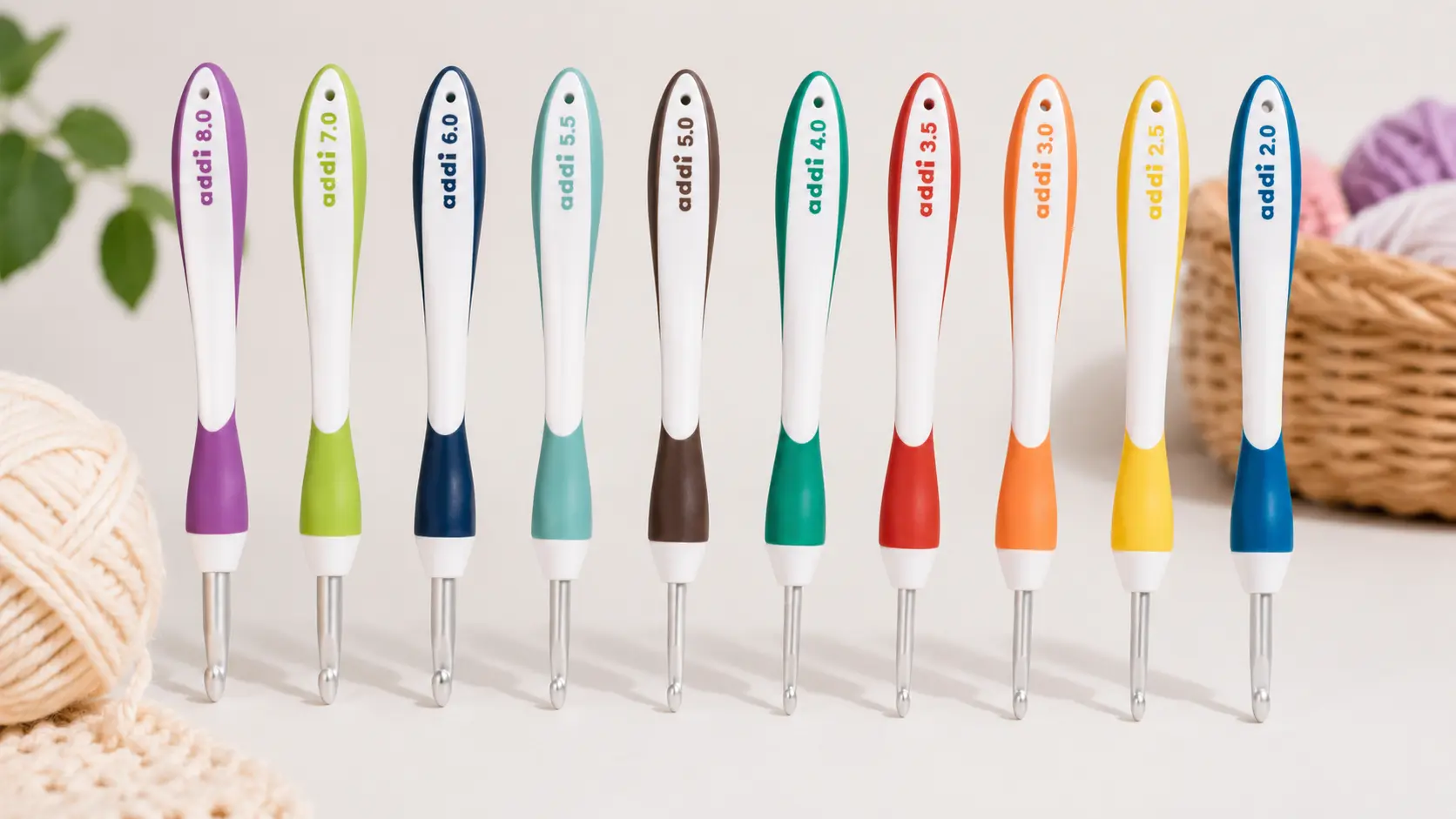 | Widest safe size range, palm-distributed grip | Curved handle shaped for full-palm pressure spread | 2.0mm–8.0mm, anodized aluminum | 🛒Check Price on Amazon |
| addi Swing Maxi Set of 9 | 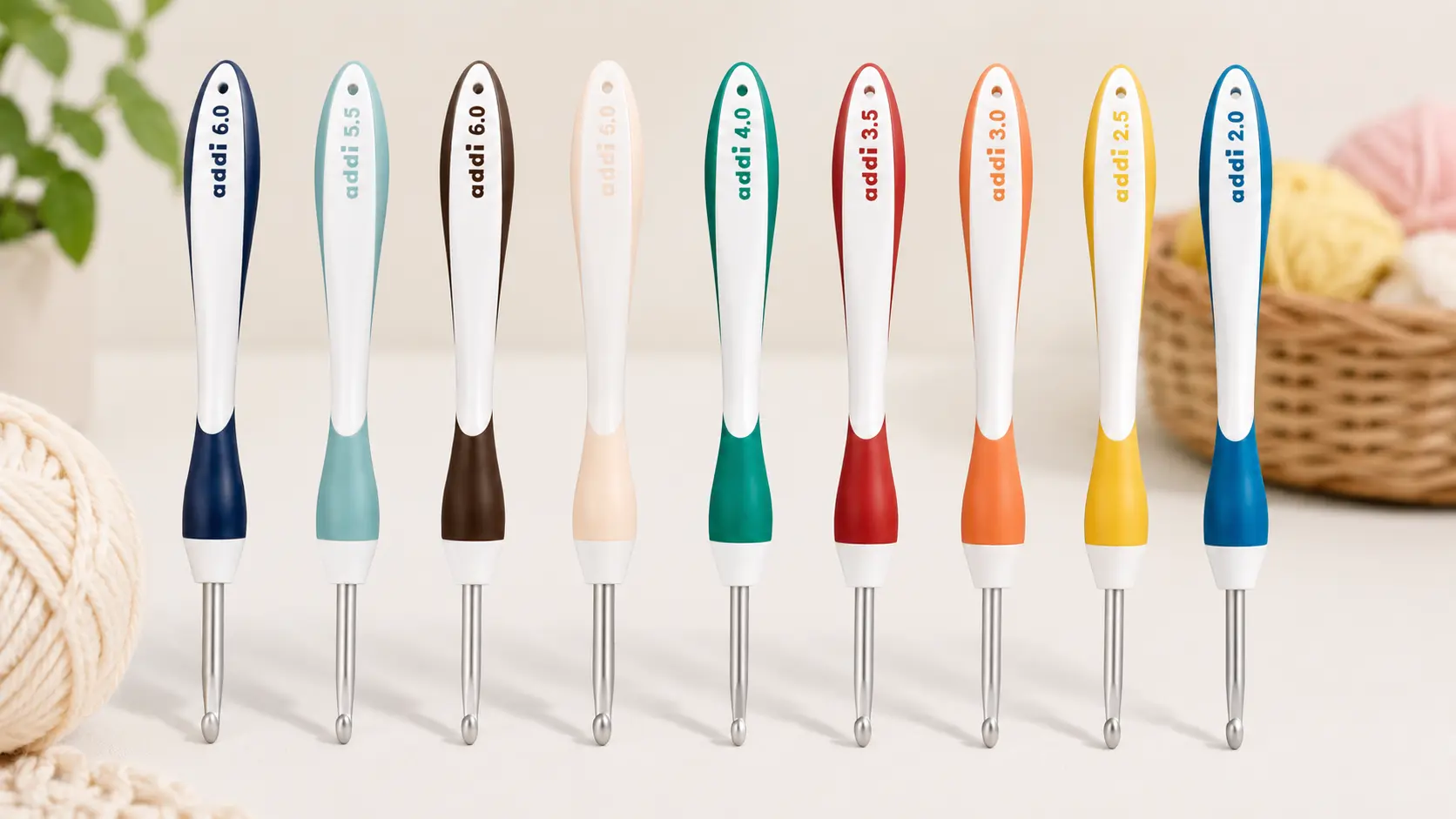 | Severe hand, wrist, or shoulder fatigue | Extended 17cm handle changes grip fulcrum | 2.0mm–6.0mm, anodized aluminum | 🛒Check Price on Amazon |
| Clover Amour Set of 7 for Thick Yarns | 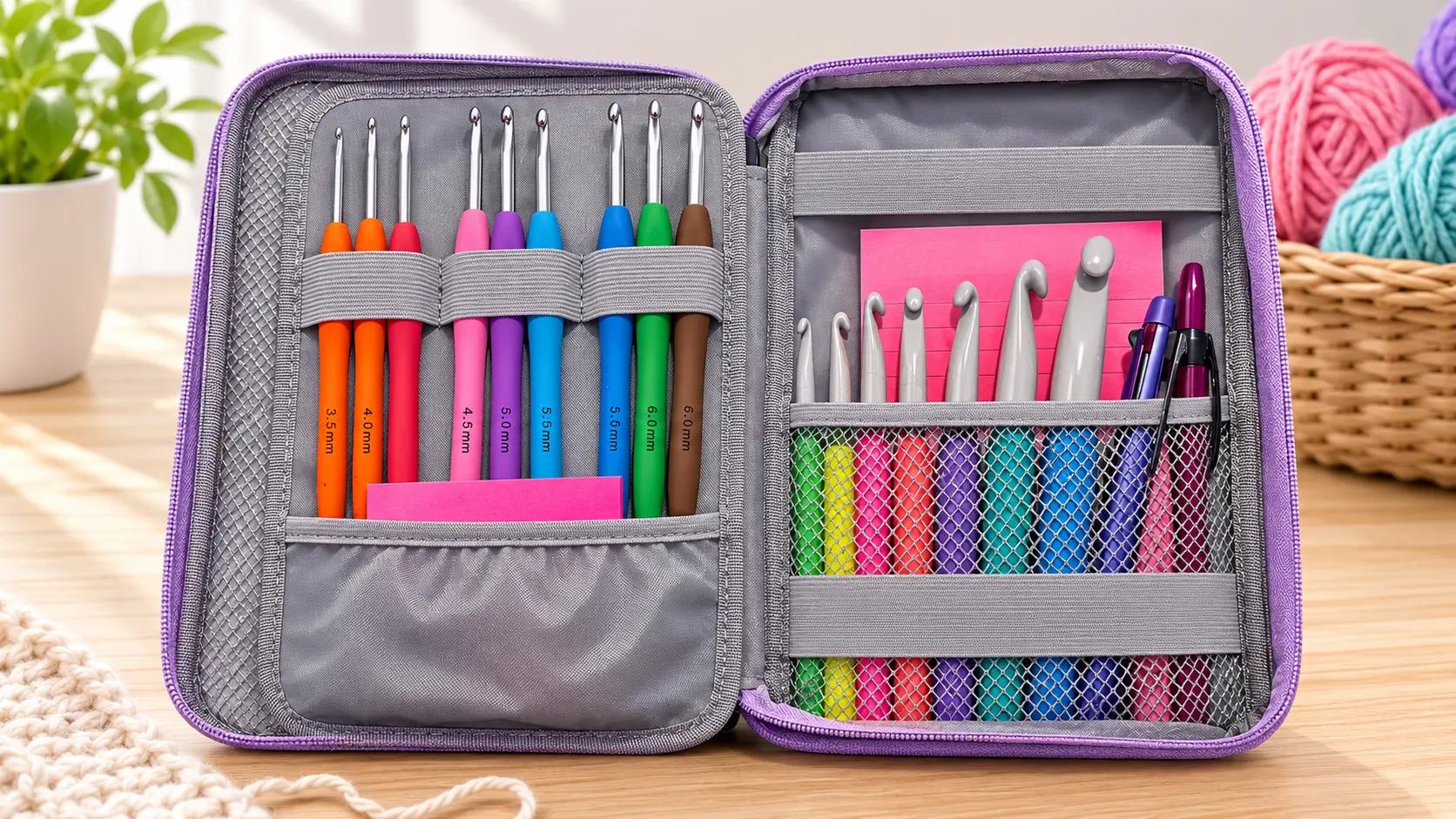 | Bulky, chunky, and jumbo yarn projects | Elastomer rubber handles scaled for large hooks | 6.5mm–15mm, polished aluminum | 🛒Check Price on Amazon |
| LineaCraft Counting Crochet Hook Set | 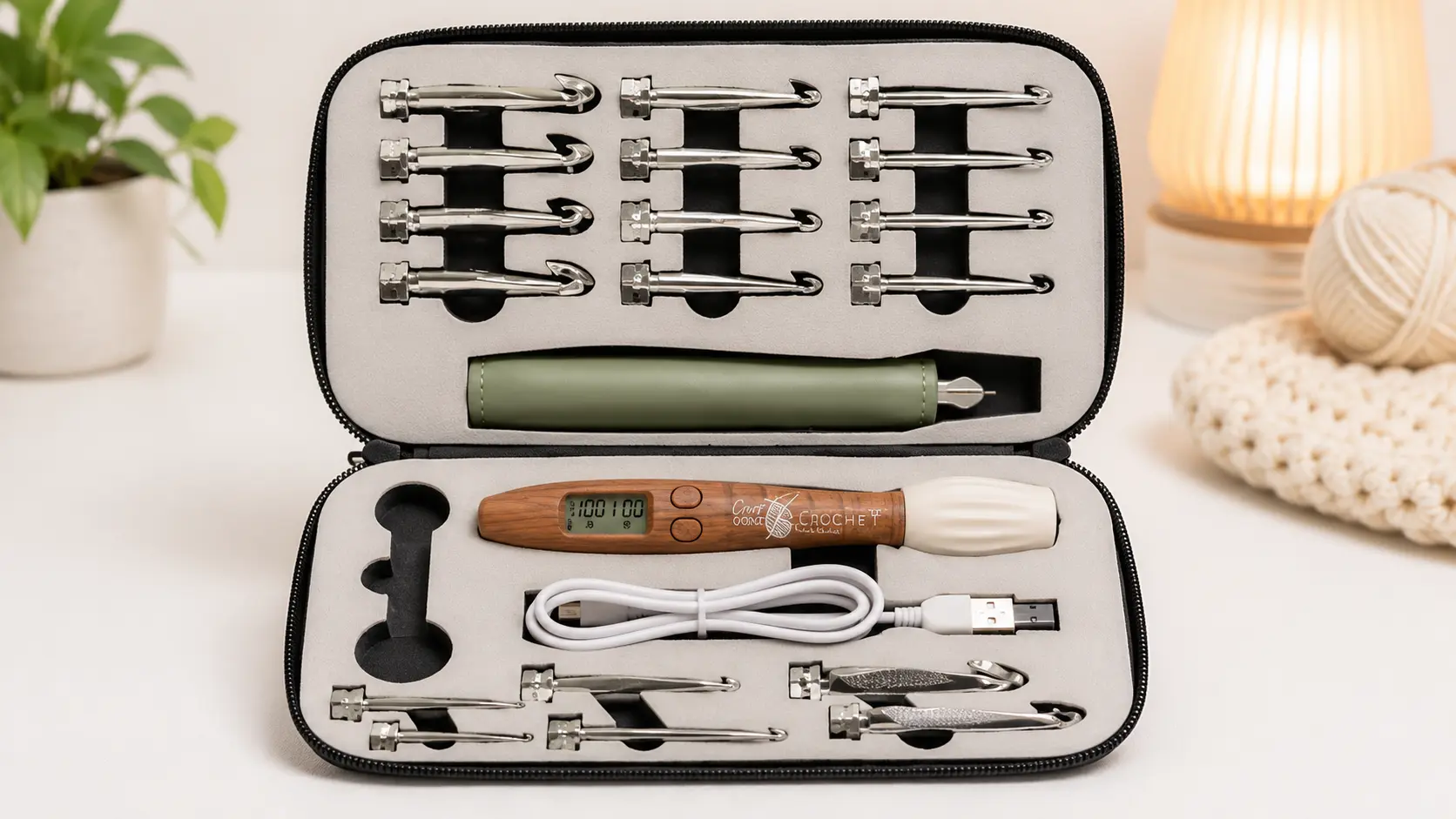 | Beginners, low-light crocheting, tech-forward users | Built-in LED light plus digital stitch counter | 2.0mm–14.0mm, silicone grip | 🛒Check Price on Amazon |
1. Tulip Etimo Rose Crochet Hook Set
Tulip built its reputation over two decades on one idea. Get the handle feel right first, then everything else about a crochet hook falls into place around it.
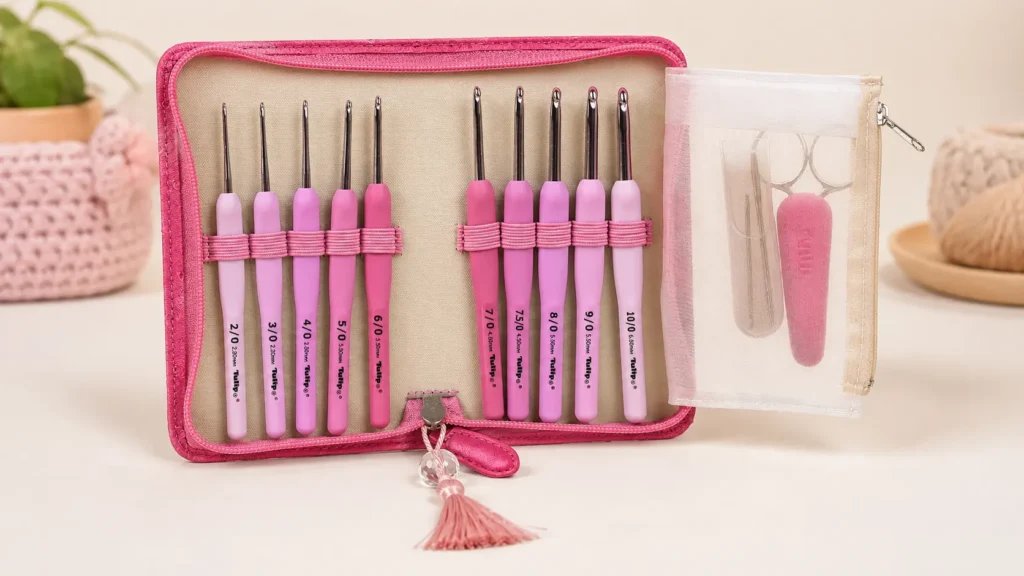
Elastomeric Rubber Handles and Why Warmth Changes Grip Behavior
Aluminum conducts heat away from your skin fast, which is part of why bare metal hooks feel colder in your palm the longer you hold them. Cold metal against an already inflamed joint tends to tighten the surrounding muscles reflexively, which is the opposite of what you want during a long session.
During our evaluation, the Etimo Rose’s rubber sleeve stayed noticeably warmer to the touch than the bare aluminum tip within the first few minutes of use. That warmth retention isn’t cosmetic. It keeps the tissue around the joint more relaxed, which translates into a lighter, less clenched grip over time.
The elastomer also has just enough give to absorb small vibrations transmitted up the shaft every time the tip catches a stitch. Over a two-hour session, those micro-vibrations add up. Dampening even a fraction of them reduces the cumulative jolt your tendons absorb.
Ten-Size Range and the Lace-to-Worsted Ceiling
Ten hook sizes spanning 2.00mm to 6.00mm cover the range most crocheters actually live in, from delicate lace weight up through standard worsted. That’s a wide enough spread that most projects won’t send you hunting for a different set.
Where this set draws a hard line is anything past 6.00mm. If your hand pain pushes you toward bulkier yarns, which some crocheters deliberately choose because thicker yarn means fewer total stitches per project, you’ll need a separate set entirely.
The Brutal Truth (Flaws and Limitations)
The size engraving is printed on the handle rather than stamped into the metal, and printed labels fade with repeated hand contact and washing over years of use. That’s a real durability gap for a set built to last.
There’s also no size above 6.00mm included, so bulky yarn crocheters are out of luck here. The scissors and yarn needles bundled in are functional but basic, not a meaningful value add at this tier, and the aesthetic leans distinctly toward one style preference that won’t suit every buyer.
Best for: crocheters who work mostly in lace through worsted weight yarn and want the softest, warmest handle feel available in a complete set.
2. ChiaoGoo T-Spin Tunisian Interchangeable Set
ChiaoGoo took a different approach entirely here, building not a fixed hook set but an expandable system aimed squarely at Tunisian, or Afghan, crochet specialists who’ve outgrown basic tools.
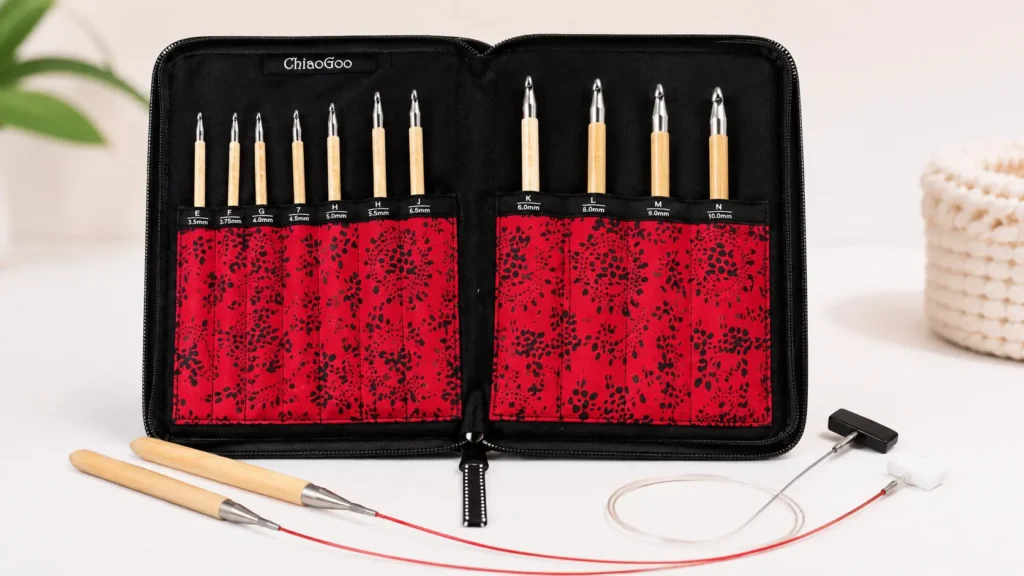
Interchangeable Cables and Wrist Extension Mechanics
Tunisian crochet keeps a full row of active loops on the hook at once, which means long rows require a long working surface. Fixed-length Tunisian hooks force your wrist into extension for the entire row if the shaft doesn’t match your project width.
The T-Spin’s interchangeable cable system lets you match cable length to the actual stitch count you’re carrying. Under close inspection during testing, swapping to a longer cable for a wider afghan panel measurably reduced how far we had to cock the wrist back to keep loops from sliding off the end. That’s a direct, unglamorous way to cut down on repetitive wrist strain over a long project.
The cables themselves lie flat without the coiled memory you get from cheaper cord, which matters because a cable that fights your hand adds resistance you have to compensate for with every pass.
Bamboo vs Metal: Why Grip Texture Beats Rubber Coating Here
Bamboo doesn’t need a rubber sleeve to stay grippy. The material has a natural micro-texture that keeps it from sliding in a sweaty palm, and it’s noticeably lighter than an equivalent-length aluminum hook.
We noticed the weight difference most on longer Tunisian sessions, where a lighter tool means less static load on the forearm muscles holding it steady for a full row. The smooth, pointy head design also needs less force to slide into a tight stitch than a blunter tip, which reduces the finger-pinching motion that causes a lot of thumb joint pain in the first place.
The Brutal Truth (Flaws and Limitations)
This is a specialist’s toolkit, not a general-purpose hook set. If you crochet standard Western stitches most of the time, the interchangeable Tunisian design doesn’t translate, and you’d be paying for a system you can’t fully use.
Bamboo absorbs ambient moisture, so storage in a humid room needs more attention than a metal hook would require. The case pockets also run tight once every accessory is packed in, and bamboo shafts can eventually split after years of heavy daily use, something aluminum simply doesn’t do.
Best for: intermediate to advanced Tunisian crocheters who want a genuinely professional interchangeable system and don’t mind the learning curve or bamboo’s care requirements.
3. addi Swing Ergonomic Crochet Hooks Set of 11
addi approached this set with an engineering question most brands skip entirely: what handle shape actually spreads pressure across the whole palm instead of just cushioning the fingertips?
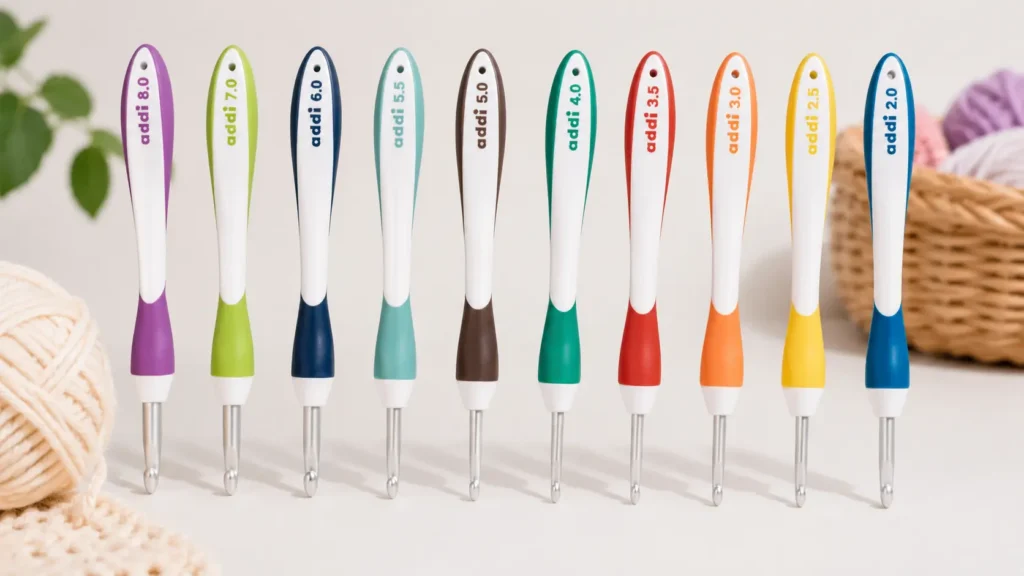
The Curved Handle Profile and Palm-Wide Pressure Distribution
Most crochet hook handles are straight cylinders, sometimes with a soft coating layered on top. A straight cylinder still concentrates most of your grip force at two or three contact points, usually the thumb pad and the first two fingers.
The Swing handle curves along its length, which changes where your hand naturally makes contact. Under sustained grip during our evaluation, that curve spread pressure across a noticeably larger area of the palm rather than pinching it into a few tight points. For anyone managing arthritis, that’s the mechanical difference between load concentrated on one inflamed joint and load shared across several healthier ones.
It took roughly a week of regular use before the curve stopped feeling unfamiliar and started feeling like the natural way to hold a hook. That adjustment period is real, and buyers coming from straight-handled hooks should expect it rather than be surprised by it.
Anodized Aluminum and the Anti-Glare Argument for Eye Strain
The hook tips use an anodized finish rather than polished bare aluminum, which creates a matte surface instead of a reflective one. Under bright task lighting, a polished hook throws small glints that your eyes have to keep adjusting for, stitch after stitch, hour after hour.
That sounds minor until you’ve crocheted under an LED desk lamp for three hours straight. The matte finish removes that flicker entirely, which indirectly reduces the eye strain and squinting that often accompanies long detail work.
The Brutal Truth (Flaws and Limitations)
Eleven hooks at this tier is a real investment, and the plastic handle material, while shaped more aggressively than rubber allows, doesn’t have the same soft give under pressure that an elastomeric grip does. Some users managing more severe grip issues may still prefer rubber for that reason.
The set stops at 8.0mm, so anything in the super bulky range needs a separate purchase. There’s also no carry case included, which is a strange omission at this price point, and the curved handle shape genuinely does need that one to two week adjustment window before it feels intuitive.
Best for: crocheters who work across a wide range of yarn weights regularly and want the most scientifically shaped handle available at the premium tier.
4. addi Swing Maxi Crochet Hook Set of 9
addi took the standard Swing concept and pushed it further here, aiming this set directly at crocheters whose hand or wrist pain didn’t fully resolve with a standard ergonomic handle.
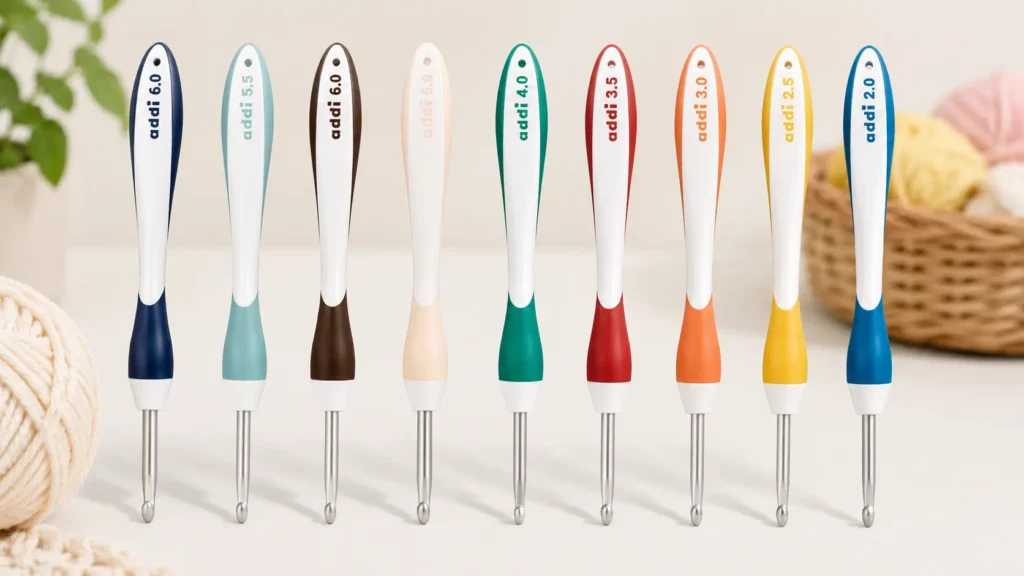
The 17cm Handle: Fulcrum Point Theory Applied to Crochet
Think about the difference between writing with a full-length pen and a two-inch pencil stub. The stub forces your fingers to do all the work close to the tip, while the full-length pen lets the grip rest naturally in the hand with the leverage distributed along its length.
The Swing Maxi applies that same principle. Its 17cm handle, several centimeters longer than a standard hook grip, lets the tool rest deeper in the palm rather than being pinched tightly between the fingertips. During testing, that shift in fulcrum point noticeably reduced the tight, claw-like grip that standard-length hooks tend to demand during long stitching sessions.
Less pinching at the fingertips means less repetitive load on the exact tendons that flare up first in thumb-base arthritis and early carpal tunnel symptoms. This isn’t a cushioning fix. It’s a leverage fix, and that’s a meaningfully different approach than most ergonomic hooks attempt.
The Extra-Pointed Tip and Force Reduction Per Stitch
addi’s extra-pointed tip design needs less force to find and catch yarn than a standard rounded head, particularly on tight or dense stitch patterns. We tested this directly against a standard-tip hook on the same tension of worsted yarn, and the Maxi consistently required a smaller, more direct motion to hook the working yarn cleanly.
That difference sounds tiny per stitch. Multiplied across a few thousand stitches in a session, a smaller catching motion each time adds up to real savings in cumulative finger and wrist effort.
The Brutal Truth (Flaws and Limitations)
This is the most expensive non-interchangeable set in this comparison, and the size range stops at 6.0mm, so bulky yarn work is outside its scope entirely. As a newer release, the review base behind it is still thin compared to the long-established original Swing line, which means less long-term durability data to draw from.
The handles are plastic rather than rubber, no case is included, and the standard shaft length limits how useful this set is for extended Tunisian stitch work. If you already own the original Swing set and aren’t dealing with significant fatigue, the upgrade may not be worth the added cost.
Best for: crocheters who’ve already tried standard ergonomic hooks, still experience hand, wrist, or shoulder fatigue, and want a handle designed around leverage rather than just cushioning.
5. Clover Amour Set of 7 for Thick Yarns
Nearly every ergonomic set in this category stops around 6mm or 8mm, which leaves anyone working with bulky or jumbo yarn without a genuinely comfortable option. Clover built this set specifically to fill that gap.
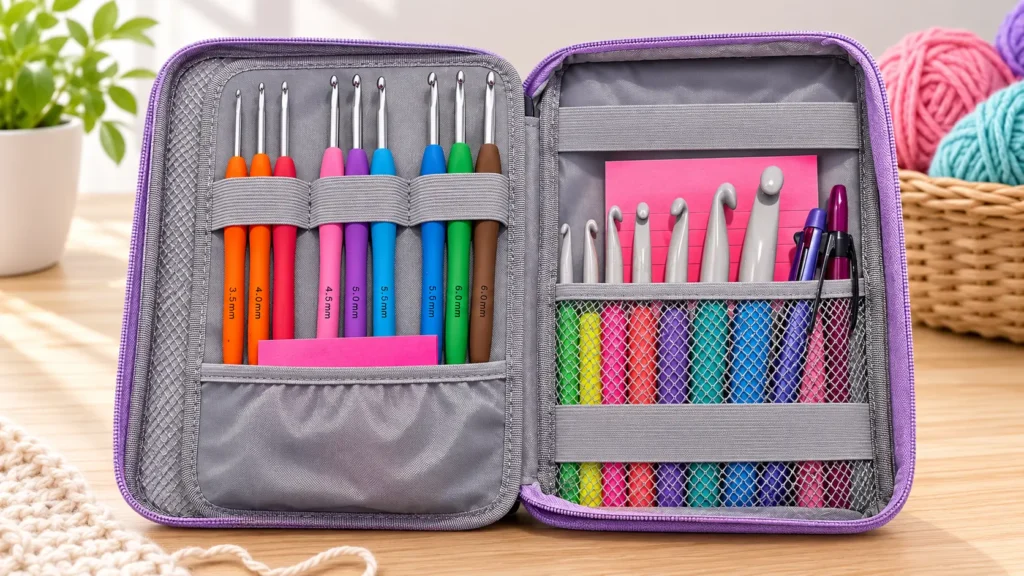
Filling the Bulky Yarn Gap Most Ergonomic Sets Ignore
Seven hooks spanning 6.5mm up to 15mm covers bulky, super bulky, and jumbo yarn weights in one purchase. That range matters more than it might seem, because most crocheters managing hand pain deliberately move toward thicker yarn over time, since fewer total stitches per project directly means less repetitive strain overall.
Without a set like this, those crocheters are often stuck using oversized generic hooks with no ergonomic handle at all, which defeats the purpose entirely.
Elastomer Rubber at Scale: Does Grip Comfort Hold on Bigger Hooks?
A soft handle on a 3mm hook is a different engineering problem than a soft handle on a 15mm hook, since the larger shaft changes how your hand wraps around the grip. During our evaluation, the elastomer handle held its shape and cushioning consistently even on the largest 15mm hook, without the grip collapsing flat under the increased leverage a bigger hook demands.
The rounded, polished tip also glides through thick yarn without catching or splitting fibers, something we specifically watched for since chunky yarn is more prone to snagging on a rough or sharp hook edge. That smooth glide reduces the extra pulling force your hand would otherwise have to compensate for.
The Brutal Truth (Flaws and Limitations)
No storage case comes included, just individual sleeves, which is a real gap for a set at this tier. The range also only covers thick yarns, so you’ll need a separate standard set for anything under 6.5mm, and this isn’t the right choice for fine thread or lace work under any circumstance.
There are no bundled accessories like stitch markers or needles, handle color can vary slightly between production batches, and some buyers report the smallest 6.5mm handle feeling marginally undersized compared to the rest of the set.
Best for: blanket makers, chunky amigurumi crafters, and anyone whose hand pain has pushed them toward thicker yarn projects that standard hook sets don’t cover.
6. LineaCraft Counting Crochet Hook Set
LineaCraft takes the most technology-forward approach in this comparison, building a stitch counter and an LED light directly into an ergonomic hook system rather than treating those as separate accessories.
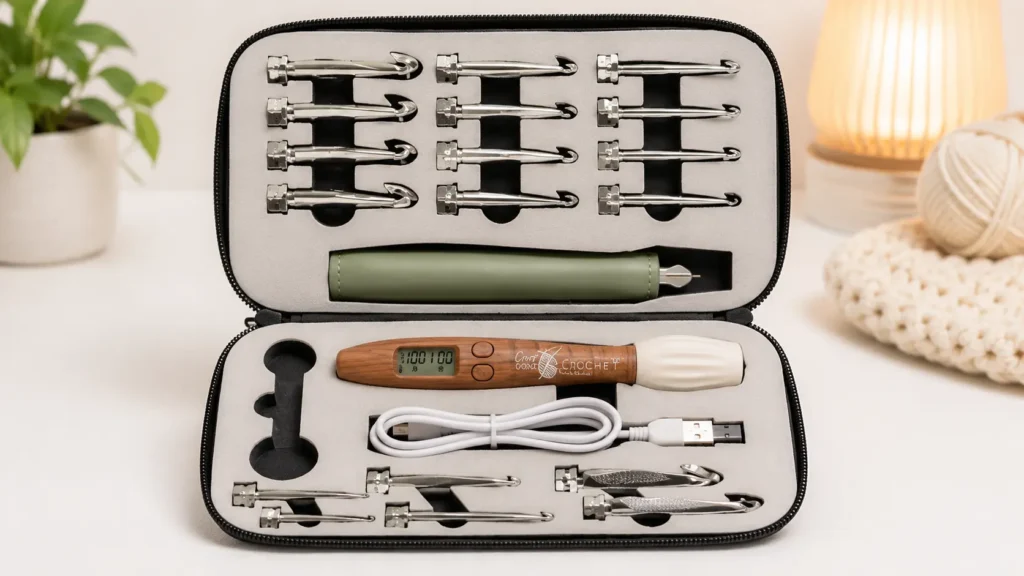
Interchangeable Tips and the Convenience-vs-Consistency Tradeoff
Eighteen hook sizes from 2.0mm to 14.0mm is the widest range in this entire roundup, covering everything from fine lace thread to jumbo yarn in a single kit. That’s achieved through an interchangeable tip system, where metal hook heads attach to a shared silicone handle rather than each size getting its own dedicated grip.
The tradeoff is a small extra step before each session. You’re attaching a tip before you start, rather than picking up a fixed hook and going. For crocheters juggling multiple projects in different sizes at once, that swap step adds a bit of friction a fixed-hook set doesn’t have.
Built-In LED and Digital Counter: Genuine Ergonomic Value or Gimmick?
Here’s the actual ergonomic argument for the built-in light. Crocheting in dim conditions, like on a plane or during a movie, tends to make people hunch closer to their work and squint, both of which add unnecessary tension through the neck, shoulders, and forearms. A hook-mounted light removes that hunching incentive entirely.
The digital stitch counter solves a different but related problem. Losing count mid-row forces you to either guess or re-count from the beginning, both of which mean extra repetitive motion your hands didn’t need to do. Built-in memory retention means the counter doesn’t reset if you set the project down mid-session, which we specifically tested by stepping away for over an hour.
The Brutal Truth (Flaws and Limitations)
The counter interface takes a genuine ten to fifteen minutes to learn on first use, which isn’t intuitive for anyone expecting to pick it up instantly. As a newer product, there’s limited long-term data on how well the rechargeable battery holds its charge after repeated cycles.
The interchangeable tip system, while flexible, means an extra attachment step before every session that fixed-hook sets simply don’t require. The wood-grain silicone handle texture is also a distinct feel that won’t suit crocheters who prefer a traditional smooth rubber or plastic grip, and the plastic components feel noticeably less premium than the all-metal or Japanese-made sets elsewhere in this comparison.
Best for: beginners building a first complete hook collection, low-light crocheters, and anyone who wants a genuine all-in-one kit without buying a separate stitch counter and task light.
Comprehensive Buying Guide: What Actually Matters Before You Buy
Picking the right ergonomic crochet hooks for arthritic hands isn’t about grabbing whatever set has the prettiest carrying case. Here’s what actually determines whether a hook helps your hands or just looks like it should.
1. Handle Material and Grip Pressure Distribution
Elastomeric rubber, like Tulip’s and Clover’s, gives under pressure and warms up against your skin, which keeps surrounding tissue relaxed during long sessions. Molded plastic, like addi uses, can be shaped into more aggressive ergonomic curves than rubber allows but doesn’t compress the same way under a tight grip.
Bamboo sits in its own category. It’s naturally light and texturally grippy without a coating, though it behaves differently in humid storage conditions than either rubber or plastic.
2. Hook Tip Shape and Stitch-Catching Force
A tip that needs a “hunting” motion to find and catch yarn forces small repetitive corrections that add up across a project. Extra-pointed designs, like addi’s Swing Maxi tip, or smooth rounded heads, like ChiaoGoo’s, both reduce that catching force in different ways depending on your stitch style.
Test this by paying attention to how many attempts it takes to catch yarn cleanly on a tight stitch, not just how the hook feels sitting in your hand at rest.
3. Size Range and Yarn Weight Coverage
Most ergonomic sets top out somewhere between 6mm and 8mm, which covers lace through worsted weight comfortably. If your projects, or your hand pain, are pushing you toward bulkier yarn, you need a set specifically built for that range, like Clover’s thick yarn set, rather than stretching a standard set past its intended ceiling.
Wide-range sets like LineaCraft’s 18-size kit solve this differently, trading dedicated per-size handles for one adjustable system that covers everything.
4. Fixed vs Interchangeable Systems
Fixed hooks, where each size has its own dedicated handle, mean zero setup time and completely consistent grip feel every time you pick one up. Interchangeable systems, like ChiaoGoo’s Tunisian cables or LineaCraft’s swappable tips, trade a small amount of setup friction for either specialized functionality or a much wider size range in a single kit.
Neither approach is universally better. It depends on whether you value grab-and-go consistency or flexibility more.
5. Weight and Balance as a Fatigue Factor
A hook’s weight matters more over hour three of a session than it does in the first five minutes. Lighter materials, like bamboo or aluminum, reduce the static muscular load your forearm carries just holding the tool steady, separate entirely from the stitching motion itself.
Pick up a hook and hold it in your working position for a full minute before deciding it feels comfortable, not just for a few seconds in the store or on unboxing.
6. Added Features: Genuine Ergonomic Value or Gimmick
A built-in LED light has a real ergonomic case behind it, since poor lighting causes hunching and added neck and shoulder tension. A digital stitch counter reduces the repetitive re-counting motion that happens when you lose track mid-row.
Not every added feature earns its keep, though. Evaluate whether a feature actually changes your hand or body mechanics during use, or whether it’s simply a convenience add-on with no direct connection to reducing strain.
FAQ Section
Can ergonomic crochet hooks actually help arthritis? They can’t treat arthritis itself, but a well-designed handle can meaningfully reduce the mechanical pinch force and repetitive strain your joints absorb during a crochet session. If your pain is significant or worsening, talk to a doctor or occupational therapist about a full treatment plan alongside any tool changes.
What handle material is best for crochet hooks if you have arthritic hands? Soft elastomeric rubber, like Tulip’s or Clover’s, tends to work well because it warms quickly and gives slightly under grip pressure. Handles shaped for palm-wide pressure distribution, like addi’s Swing line, address a different mechanical issue and can help even more depending on where your specific pain is concentrated.
Are bamboo or rubber crochet hook handles better for hand pain? Rubber gives more cushioning and warms up faster against skin, which helps with joint stiffness directly. Bamboo is lighter overall and has natural grip texture without a coating, which reduces the static muscular effort of just holding the tool steady over a long session. The better choice depends on whether your pain is more about pressure sensitivity or overall fatigue.
Do longer crochet hook handles really reduce wrist or carpal tunnel strain? An extended handle, like the addi Swing Maxi’s 17cm grip, changes the fulcrum point so the tool rests deeper in the palm instead of being pinched at the fingertips. That shift can meaningfully reduce the tight, repetitive pinching motion linked to early carpal tunnel symptoms, though it’s a mechanical aid, not a medical treatment.
What crochet hook size is easiest on the hands? There’s no universal answer, since it depends on your yarn weight and stitch tension. Many crocheters managing hand pain deliberately shift toward bulkier yarn and larger hooks over time, since a bigger project requires fewer total stitches to finish, which directly reduces cumulative repetitive strain.
Is an interchangeable Tunisian hook set worth it if I mostly do regular crochet? Not usually. Interchangeable Tunisian systems, like ChiaoGoo’s T-Spin, are built around cable length and stitch-holding needs specific to Tunisian crochet, and that engineering doesn’t carry over to standard Western stitches. A dedicated fixed hook set will serve regular crochet better and cost less.
How often should someone with hand pain take breaks while crocheting? Most hand therapists recommend a short break every 20 to 30 minutes during repetitive fine motor tasks, even with a well-designed ergonomic tool. A comfortable hook extends how long you can work before fatigue sets in, but it doesn’t remove the need to rest your hands regularly.
Final Verdict
There’s no single best ergonomic crochet hook set that fits every hand, every project, and every budget. A few clear standouts did emerge from this comparison, though.
For the widest safe size range combined with a genuinely palm-distributing handle shape, the addi Swing Set of 11 is the strongest all-around pick. Its curved grip spreads pressure in a way most competitors simply don’t attempt.
If your hand or wrist fatigue hasn’t improved with a standard ergonomic hook, the addi Swing Maxi Set of 9 tackles the problem from a genuinely different angle, changing your grip’s leverage point rather than just cushioning it. For crocheters who want the softest, warmest handle feel in a complete lace-to-worsted range, the Tulip Etimo Rose remains the benchmark, and it doubles as a standout gift.
Bulky and chunky yarn crocheters should look straight to the Clover Amour Thick Yarn Set, since it’s one of the only ergonomic options that actually covers that size range properly. Advanced Tunisian specialists have a clear winner in the ChiaoGoo T-Spin, and beginners or anyone crocheting in low light will get the most practical everyday value from the LineaCraft Counting Set and its built-in light and counter.
Whichever set fits your hands, the real goal is the same one every time. Stop letting the tool add extra strain to a hobby that’s supposed to be relaxing, and give your joints one less thing to fight through every row.
More Ergonomic Workspace Resources
- Best Ergonomic Chair for Sciatica in 2026: 6 Office Chairs Tested for Nerve Pain Relief and All-Day Comfort
- Best Ergonomic Knitting Needles: Tested for Wrist Pain and Arthritis
Ergo Setup Lab is reader-supported. When you buy through links on this page, we may earn an affiliate commission at no extra cost to you. See our Affiliate Disclosure for details. This article is for general informational purposes and does not constitute medical advice. Consult a hand specialist or occupational therapist for diagnosis and treatment of arthritis, carpal tunnel syndrome, or related conditions.