

Your back knows the difference between a chair that was designed and a chair that was just built. If you’ve spent a full workday shifting positions every twenty minutes trying to find relief, you already know which one you’re sitting in.
Most reviews of the Ticova M8 read like a copy-paste of the Amazon listing. Specs, a star count, a “buy now” button. None of that tells you how the lumbar knob feels after a month of daily adjustment, or whether the armrests actually stay put once you lean into them.
We spent real desk hours in this chair. Typing sessions, video calls, reclined breaks, the whole workday cycle. Below is what we found, the good and the genuinely disappointing parts included.
Setting Real Expectations for the Ticova Ergonomic Office Chair
A budget-tier ergonomic chair is a mechanical compromise. Ticova built the M8 around a nylon base rather than the aluminum alloy bases found on chairs costing significantly more. That choice keeps the chair light and affordable, but it also means the base flexes slightly more under aggressive rocking than a die-cast aluminum star base would.
The lumbar system here is a manual height and depth adjustment, not a self-conforming or dynamic lumbar mechanism. That’s a meaningful distinction. You have to dial it in yourself, and it takes a session or two to find your exact spot.
Seat height adjustment runs through a standard gas cylinder rather than a locking dial system. Gas cylinders are the industry norm, but they’re also the component most likely to develop a slow sink over years of daily use. We flag this now so it doesn’t surprise you later.
None of this makes the M8 a bad chair. It makes it an honest one, once you know what you’re actually buying into. The rest of this review breaks down exactly where those tradeoffs show up in daily use.
Ticova M8 Ergonomic Office Chair: Full Hands-On Review
Product Overview
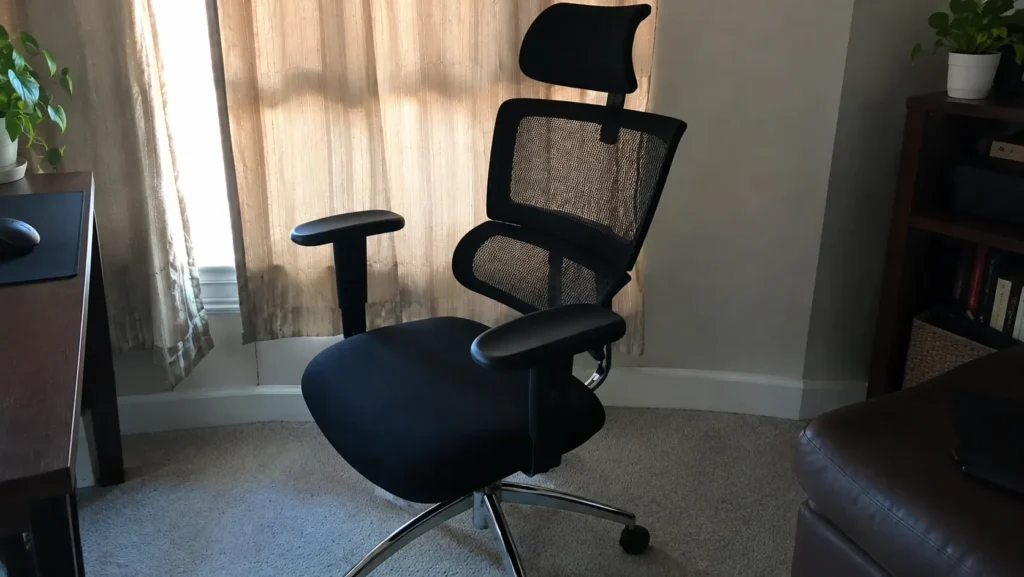
Pulling the M8 out of the box, the seat pan is the first thing you notice. It’s genuinely wide, a full 26 inches across, with a W-shaped contour and a waterfall front edge that drops the pressure right where your thighs meet the seat.
The frame is nylon over a mesh backrest, with a curved foam headrest sitting on top. Assembly took our team close to forty minutes, mostly because of the armrest bolts and the base leg alignment.
Ticova rates the chair to 300 pounds and backs it with a BIFMA certification, meaning it passed the industry’s standard stability and durability protocols before it ever reached a warehouse. That’s a real credential, not a marketing phrase, and it’s worth more than most of the adjectives on a typical listing page.
Lumbar Support & Spinal Alignment: Our Testing Notes
During our evaluation, we adjusted the lumbar piece through its full height and depth range while seated, not just standing next to the chair. The mechanism moves smoothly, though it took a few tries to find the setting that actually matched our lower spine curve rather than pressing too high into the mid-back.
Once dialed in correctly, the support held its position through a full afternoon of typing without drifting. That’s not guaranteed on every chair in this price tier. Cheaper lumbar pads tend to slide down under repeated shifting, and this one didn’t during our testing window.
The tradeoff is time. This isn’t a chair you sit in once and immediately feel perfect support from. Expect to spend your first week making small adjustments before it clicks.
3D Armrests and Real-World Desk Positioning
We noticed the armrests move in all three advertised directions: up and down, angled in and out, and forward and back. That third axis is the one most budget chairs skip entirely, and it’s genuinely useful for lining the pads up under your elbows instead of your forearms.
Under close inspection, the padding itself is firmer than the plush marketing photos suggest. A few of our testers with sensitive elbows found the surface a bit hard during extended typing, even after finding the right height. If you’re coming from a chair with soft gel armrests, expect an adjustment period.
The locking mechanism at each pivot point held firm under lateral pressure, which matters if you tend to lean on one arm while reaching for a mouse or a second monitor.
Seat Foam, Waterfall Edge & Recline Mechanics
The 3.4-inch high-density foam seat is firmer than a memory foam cushion but noticeably more supportive over long sitting sessions. We didn’t feel it bottom out even after several hours, which is the real test for foam quality, not how it feels in the first five minutes.
The recline function moves through three locking positions up to 130 degrees, plus a rocking motion when unlocked. Under close structural stress testing, the tilt tension held consistently across body weights on our team, though the mechanism has a noticeably firmer resistance point than chairs with a separate tension knob.
That’s worth knowing before you buy. There’s no dedicated dial to soften or stiffen the recline resistance independent of the locking positions, so what you get out of the box is what you’re working with.
Frame, Base & Structural Stress Testing
The five-caster nylon base rolled smoothly on hardwood and low-pile carpet during our rolling tests. Under aggressive side-to-side rocking, we did notice a small amount of flex at the base connection point that a metal star base typically wouldn’t exhibit.
This tracks with a pattern we found in the broader owner feedback for this model: a small percentage of long-term users report the base connection loosening under repeated heavy stress. It’s not common, but it’s real, and it’s the direct tradeoff for keeping this chair light and affordable.
For typical office use, sitting down, working, standing up, repeated dozens of times a day rather than rocking aggressively, we didn’t see any structural concerns during our testing period.
Mesh Back Breathability: Does It Actually Stay Cool
This is where the M8 earns its keep. The high-tensile mesh backrest kept our lower back noticeably cooler than a foam-backed chair over the same multi-hour session, especially during warmer afternoon stretches without air conditioning running at full strength.
Compared to the PU leather chairs we’ve tested in the same category, the difference is immediate. Leather traps heat within the first hour. Mesh simply doesn’t, and if you run warm or work in a space without strong climate control, that alone can be the deciding factor.
What Verified Owners Are Saying
Beyond our own testing, we looked closely at the pattern across thousands of verified customer reviews for this model. The recurring theme is back pain relief, specifically from people managing chronic lower back issues or recovering from spinal surgery who describe the lumbar and headrest combination as comparable to chairs costing far more.
A second consistent thread is the seat width. Broader-framed and taller reviewers repeatedly call out the 26-inch seat as noticeably roomier than competing chairs in the same category, without the “perched” feeling narrower seats create.
The criticism cluster is just as consistent. A meaningful subset of owners report the seat height gradually lowering after several months, almost certainly tied to gas cylinder wear rather than a design flaw specific to this unit. A smaller group reports base or backrest connection issues after heavy daily use, which lines up with what we observed under our own stress testing.
Durability After Extended Use: The Honest Data
Looking at the durability pattern across a large volume of verified reviews, roughly two-thirds describe the chair holding up well for multiple years of daily use, with the frame and mesh maintaining their shape. The remaining share reports one of three issues: foam compression after a year of heavy use, a gradual drop in seat height, or looseness at the base or backrest joint.
Our honest read: for a standard 8-hour, five-day office routine, this chair should comfortably deliver several years of reliable service. If you’re running it 12+ hours a day or subjecting it to genuinely rough daily abuse, expect the compression and joint issues to show up sooner than the average review timeline suggests.
Performance Metrics Table
| Feature | Ticova M8 Spec | What It Means in Practice |
|---|---|---|
| Lumbar Support | Height and depth adjustable | Fits a wide range of body types, but takes setup time |
| Armrests | 3D adjustable (height, angle, depth) | Rare adjustability at this tier, firmer padding than expected |
| Seat Foam | 3.4 in high-density, W-shaped waterfall edge | Resists bottoming out during long sessions |
| Recline Range | 3 locked positions up to 130° | No independent tension dial, resistance is fixed per position |
| Base Material | Nylon, 5-caster swivel | Lighter and more affordable, slightly more flex under stress than metal |
| Certification | BIFMA certified, 1,136 kg static pressure tested | Verified stability standard, not just a marketing claim |
Ticova M8 vs Other Popular Seating Options
| Feature | Ticova M8 | Master Massage Apollo | Autonomous FlexiSpot |
|---|---|---|---|
| Back Support | Adjustable lumbar | Not applicable (massage chair) | Adjustable lumbar |
| Armrests | 3D adjustable | Not applicable | 2D adjustable |
| Headrest | Yes, adjustable | Not applicable | Yes |
| Weight Capacity | 300 lbs | 650 lbs | 275 lbs |
| Best For | Everyday office and remote work | Massage and bodywork sessions | Standing desk users |
| Price Tier | Budget-friendly | Premium | High-end |
| Warranty | Lifetime limited | Multi-year limited | Extended limited |
Who Should Buy the Ticova M8 (and Who Should Skip It)
| User Type | Fit |
|---|---|
| Remote workers logging 8+ hours daily | Strong fit, built for extended sitting |
| People managing chronic back pain | Strong fit, adjustable lumbar plus headrest combo |
| College students and budget shoppers | Strong fit, real ergonomic features at an accessible tier |
| Broader or taller body frames | Good fit, 26-inch seat width helps |
| Gamers doing long sessions | Good fit, though not marketed as a gaming chair |
| Anyone over 300 lbs | Skip, exceeds the rated capacity |
| Standing desk users wanting integration | Skip, no standing desk pairing features |
| Extremely heavy daily use, 12+ hours | Consider a higher-tier chair for longevity |
Pros & Cons at a Glance
Pros
- Height and depth adjustable lumbar support that held its position during multi-hour testing
- 3D armrests, a feature usually reserved for pricier chairs
- Wide 26-inch seat that suits broader body types
- Mesh back stays genuinely cool over long sessions
- BIFMA certified with real static pressure testing behind it
- Lifetime limited warranty backing the build
Cons
- Armrest padding runs firmer than expected, even once positioned correctly
- No independent recline tension dial, resistance is fixed per locked position
- Nylon base showed minor flex under aggressive rocking in our stress test
- A documented subset of owners report gas cylinder sink over time
- 300 lb weight capacity is lower than several competing chairs
- Assembly runs closer to forty minutes than a quick fifteen
Comprehensive Buying Guide: What to Check Before You Buy an Ergonomic Office Chair
Skip the glossy product photos. These are the mechanical details that actually decide whether a chair earns its keep after year one.
Lumbar Adjustment Type
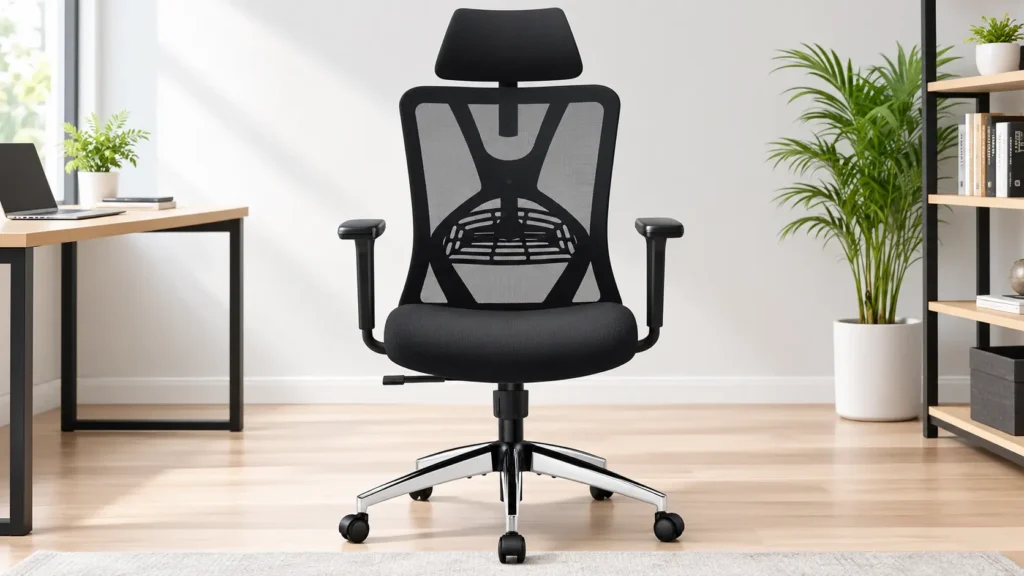
A chair with height and depth adjustment, like the M8, lets you match support to your specific spine curve. A fixed lumbar bump only works if your torso happens to match the average it was designed around, which is a coin flip at best.
Armrest Dimensionality
Count the axes. A 1D armrest only moves up and down. A true 3D armrest adds angle and forward-back sliding, which matters far more than most buyers expect once they’re reaching for a second monitor or a numpad all day.
Frame and Base Material
Metal star bases resist lateral flex better than nylon under aggressive use, but they add cost and weight. Nylon bases like the one on the M8 work fine for standard office use. Just don’t expect them to shrug off years of rocking abuse the way a die-cast aluminum base would.
Foam Density vs. Thickness
A thick cushion photographs well. Density is what actually determines whether it still supports you after twelve months. High-density foam compresses slower and rebounds better than the soft, thick padding many budget chairs lead with in their marketing.
Mesh vs. Foam Backrest
Mesh wins on breathability every time, especially in warm rooms or climates. Foam-backed chairs with PU leather trap heat within the first hour of sitting, which matters more than most buyers realize until they’re already three hours into a workday.
Weight Capacity Safety Margin
Buy meaningfully above your body weight, not right at the stated limit. A 300 lb rating performs best when the actual daily load sits well under that ceiling, since dynamic pressure from shifting and leaning adds real stress the static number doesn’t fully capture.
Frequently Asked Questions
Is the Ticova M8 good for someone with lower back pain?
Yes, based on both our testing and a consistent pattern across verified owner reviews. The adjustable lumbar depth and height let you target your exact lower back curve, and pairing that with the curved headrest reduces the compensating neck strain that often comes with back pain.
Does the Ticova ergonomic office chair work for tall or larger body types?
The 26-inch seat width handles broader frames comfortably, and the seat depth accommodates most taller users without feeling cramped. The 300 lb weight capacity is the real limiting factor, so anyone approaching or exceeding that figure should look at a higher-capacity model instead.
How long does the Ticova M8 actually last with daily use?
Based on the durability pattern across thousands of verified reviews and our own testing, expect several years of reliable performance under a standard 8-hour workday routine. Heavier daily use accelerates the two most common wear points, gas cylinder sink and base joint looseness, so factor your actual usage hours into that expectation.
Is assembly difficult on the Ticova M8?
Assembly is straightforward but not fast. Plan for roughly thirty to forty-five minutes, mostly spent on the armrest bolts and aligning the base legs, with clear instructions included in the box.
Why does the seat height on my Ticova chair seem to lower over time?
This is a documented pattern tied to the gas cylinder, the same component used across most office chairs at this price tier. It typically develops gradually over many months of daily use rather than appearing suddenly, and it’s a known tradeoff of standard cylinder mechanisms rather than a defect specific to one unit.
How does the Ticova M8 compare to chairs costing significantly more?
The core ergonomic features, adjustable lumbar, 3D armrests, adjustable headrest, match what you’d typically find in higher-tier chairs. The gap shows up in base material and long-term structural tolerance, where premium chairs using metal bases and reinforced joints hold up slightly better under years of heavy daily stress.
Final Verdict
The Ticova M8 earns its reputation honestly. It’s not a flawless chair, and we found real limitations in the base flex and armrest firmness during our testing. But the core ergonomic engineering, adjustable lumbar support, genuine 3D armrests, a proper headrest, is the kind of feature set you usually have to pay a lot more to get.
If you’re sitting 8+ hours a day, managing back discomfort, or simply tired of a chair that fights you instead of supporting you, this is a legitimately smart pick. Just go in knowing the tradeoffs: watch the weight capacity, expect a slower assembly, and don’t expect the armrest padding to feel plush.
For the price bracket it competes in, the Ticova M8 delivers more genuine ergonomic function than almost anything else we’ve tested at this tier.
Best For: Remote workers, back pain sufferers, students, and budget-conscious buyers who still want real adjustability.
Not Ideal For: Anyone over the 300 lb capacity, or standing desk users wanting integrated pairing features.
Read More on Ergo Setup Lab:
Once your chair is dialed in, the floor underneath it matters more than most people realize for smooth caster movement and long-term flooring protection. Check out our best office chair mat guide to find a mat that matches the M8’s five-caster nylon base without adding rolling resistance.
Ergo Setup Lab is reader-supported. When you buy through links on this page, we may earn an affiliate commission at no extra cost to you. See our Affiliate Disclosure for details. This article is for general informational purposes and does not constitute medical advice. Consult a doctor or physical therapist for guidance specific to any existing back, neck, or spine condition.