
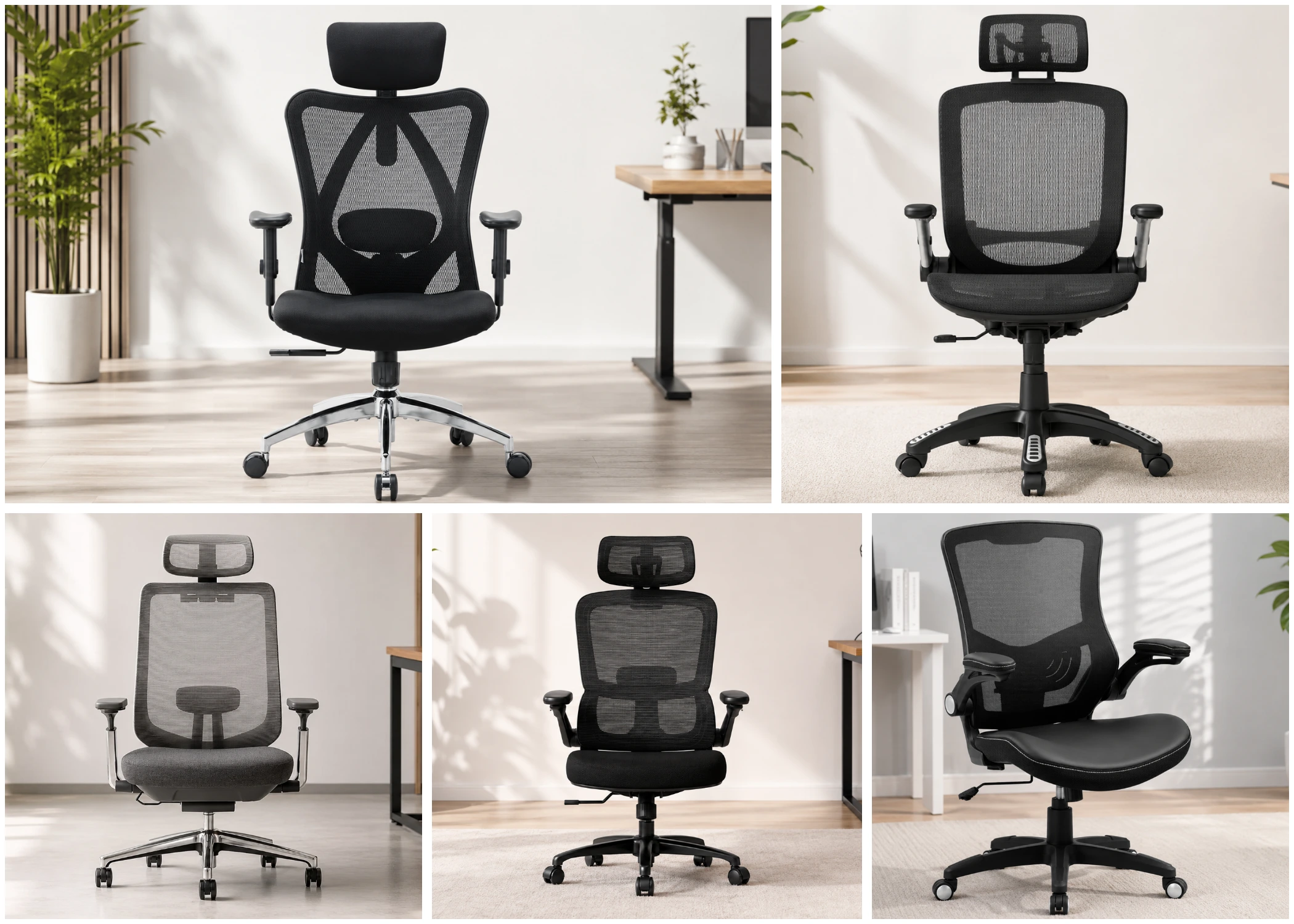
Your lower back knows the exact minute your chair stops doing its job. For most people working from a standard desk chair, that minute lands somewhere around 2 or 3 in the afternoon.
The cushion has flattened by then. The lumbar bump, if there ever was one, has slid somewhere it shouldn’t be. You’re perched forward, shoulders creeping toward your ears, reaching for a stretch that never quite fixes it.
A genuinely good ergonomic chair solves that. The problem is that most of the chairs marketed as “ergonomic” at this budget are really just mesh-backed desk chairs with a sticker that says ergonomic on the box.
We’re not going to pretend a $280 chair replaces a $1,200 Steelcase. That’s not the goal here. The goal is finding which chairs under $300 actually deliver real adjustability, honest build quality, and lumbar support that holds up past month three, and which ones are cutting corners you won’t notice until your back does.
We pulled the five best-selling ergonomic office chairs under $300 on Amazon right now and broke down the mechanics behind each one: the lumbar adjustment systems, the armrest tiers, the base materials, the tilt mechanisms. If you want the fast answer, jump to the comparison table below. If you want to understand why some of these chairs will still feel great in year three and others won’t, keep reading.
The Brutal Reality of Budget Ergonomic Chairs Under $300
Let’s set expectations before we get into specific chairs, because the word “ergonomic” gets stretched thin in this price range.
A true synchro-tilt mechanism, the kind found in chairs like the Steelcase Leap or Herman Miller Aeron, lets the seat pan and backrest recline at different rates, usually somewhere around a 2:1 ratio. Your hips open up while your eye line barely shifts. None of the five chairs in this roundup do that.
What you get instead is a simple tilt-lock mechanism. The seat and back move together as one unit, and a tension knob controls how much resistance you feel when you lean back. It works fine for casual recline. It’s just not the same biomechanical event as a true synchro system.
Base material matters more than most shoppers realize, too. Aluminum bases resist warping under repeated tilting stress and hold their shape for years. Nylon composite bases, the standard at this price point, are lighter and cheaper to produce, and under sustained torque from aggressive leaning, they’re the more likely part to develop a creak or a slight wobble first.
Foam density is the other quiet variable. Premium chairs use high-resiliency polyurethane foam, rated by ILD (indentation load deflection), that bounces back to shape for years of daily compression. Budget foam, the kind padding most sub-$300 seats, tends to lose a noticeable percentage of its loft somewhere in the 18 to 30 month range depending on how many hours a day it’s under load.
None of this means a budget ergonomic chair is a bad buy. It means you need to know which corners got cut before you commit, so the trade-off actually matches how you sit and how many hours you’re in the seat. That’s what the rest of this guide breaks down, chair by chair.
Quick Comparison Table
| Product | Product Image Placeholder | Best For | Key Feature | Core Spec | Buy Now |
|---|---|---|---|---|---|
| SIHOO M18 Ergonomic Office Chair | 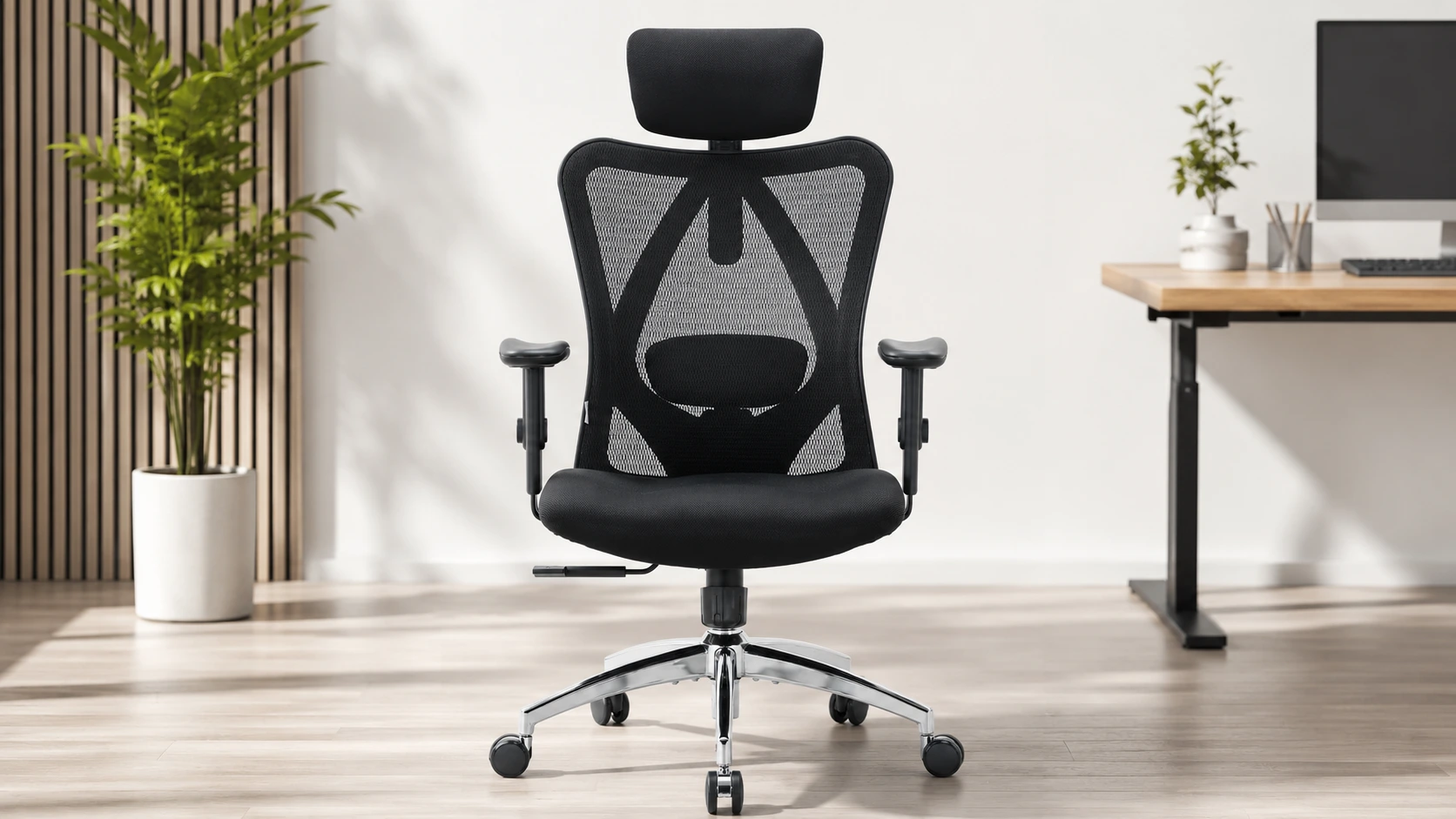 | Best overall value, most reviewed | 4-way adjustable lumbar (height + depth) | 330 lb capacity, 3-yr warranty | 🛒Check Price on Amazon |
| GABRYLLY Ergonomic High Back Mesh Office Chair | 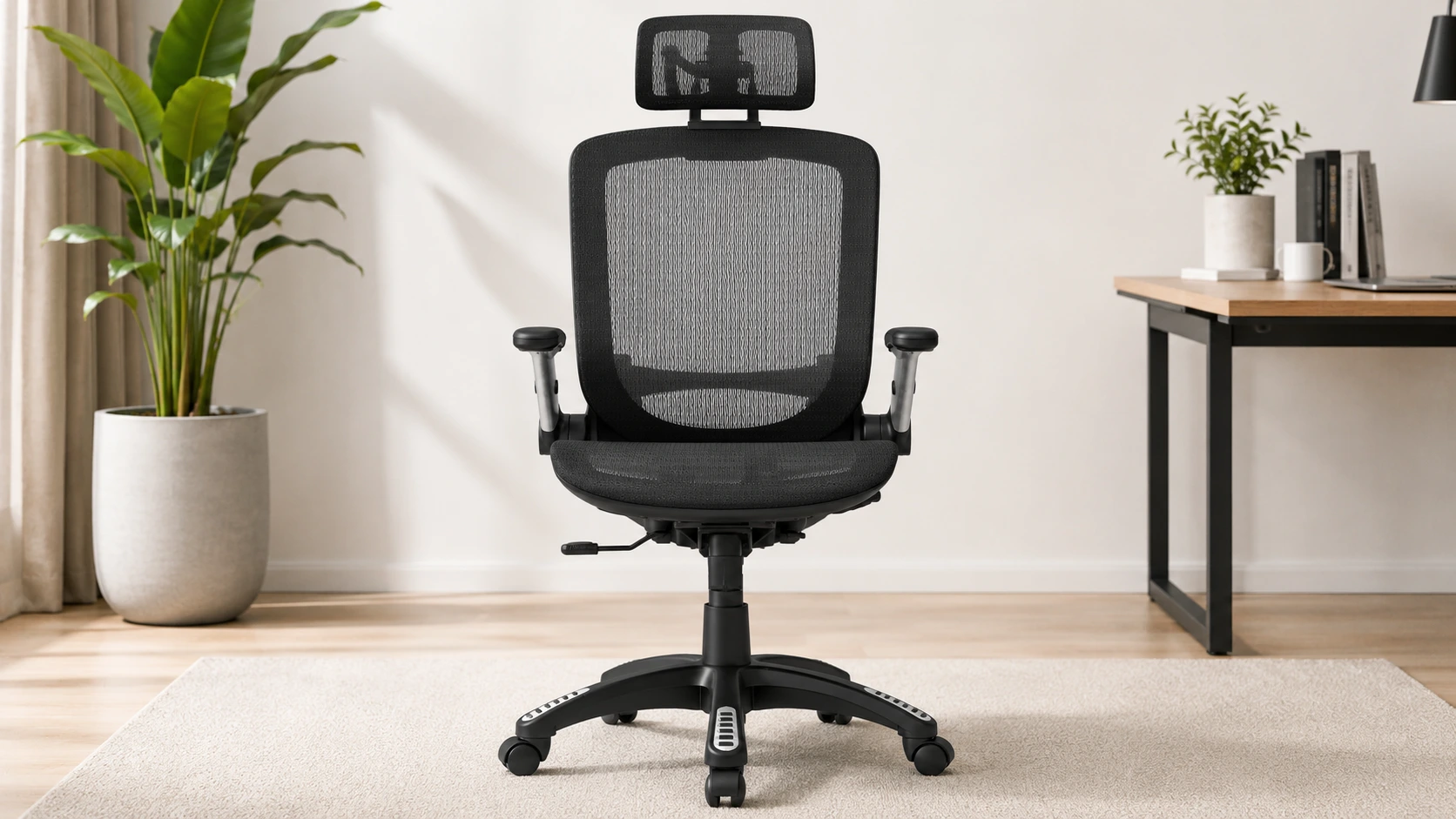 | Big and tall users | Full mesh seat + back, highest weight rating | 400 lb capacity, 90 to 120 degrees tilt | 🛒Check Price on Amazon |
| COLAMY Atlas Ergonomic Mesh Office Chair | 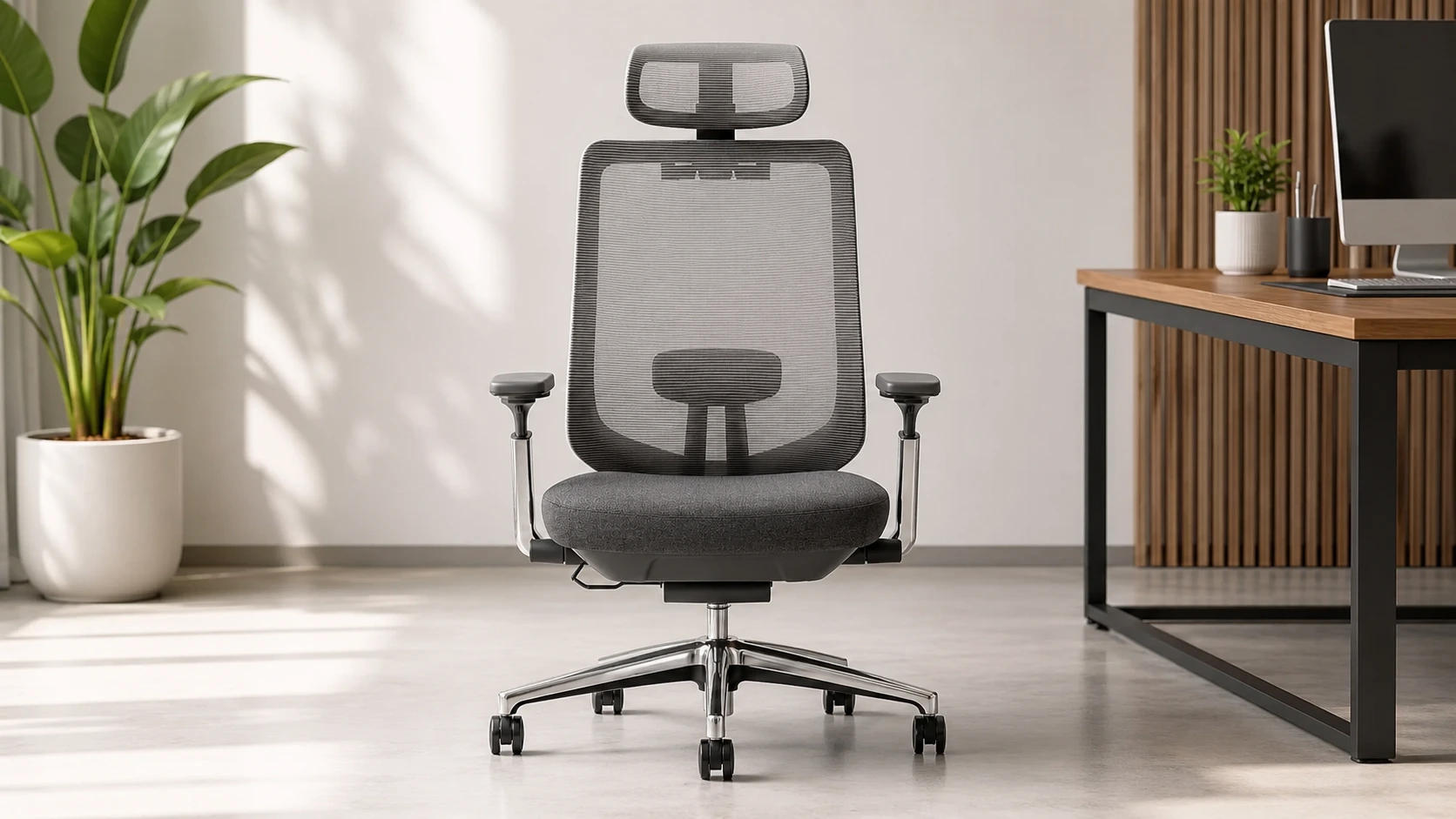 | Best build quality, 8+ hour sitters | 4D armrests + sliding seat pan + aluminum base | Korean mesh, 3-yr warranty | 🛒Check Price on Amazon |
| TRALT Ergonomic Office Chair | 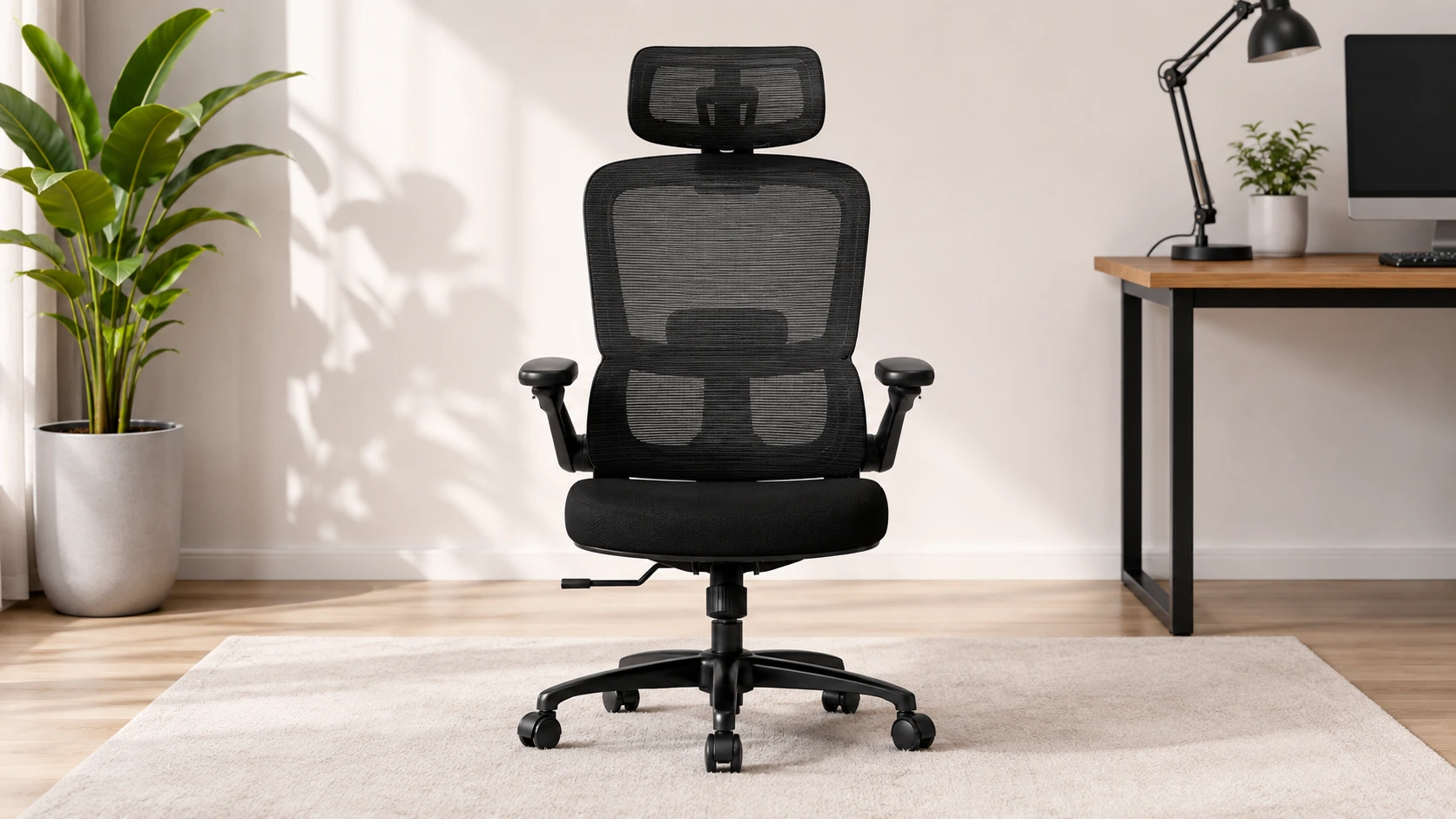 | Fastest setup, best warranty | Lifetime warranty, ~15-min tool-free assembly | 330 lb capacity | 🛒Check Price on Amazon |
| X XISHE Ergonomic Desk Chair | 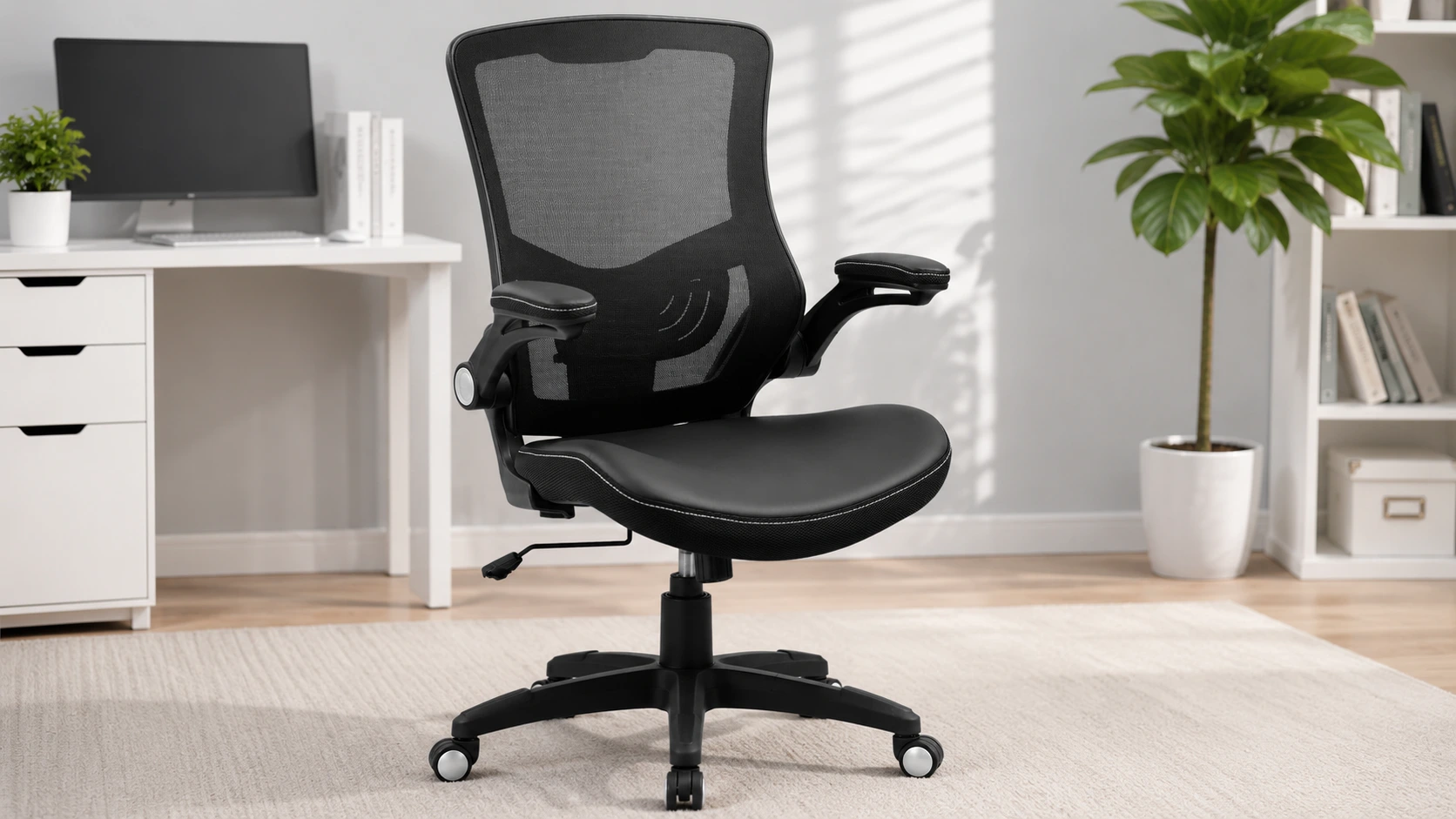 | Highest rated, tightest budget | Hybrid PU leather seat + mesh back, SGS/BIFMA certified | 300 lb | 🛒Check Price on Amazon |
1. SIHOO M18 Ergonomic Office Chair
SIHOO built its reputation on one thing: making genuine lumbar adjustability accessible below the $150 mark, and the M18 is the chair that cemented it. With more than 16,000 reviews behind it, this is the default budget pick most ergonomic chair lists point to first.
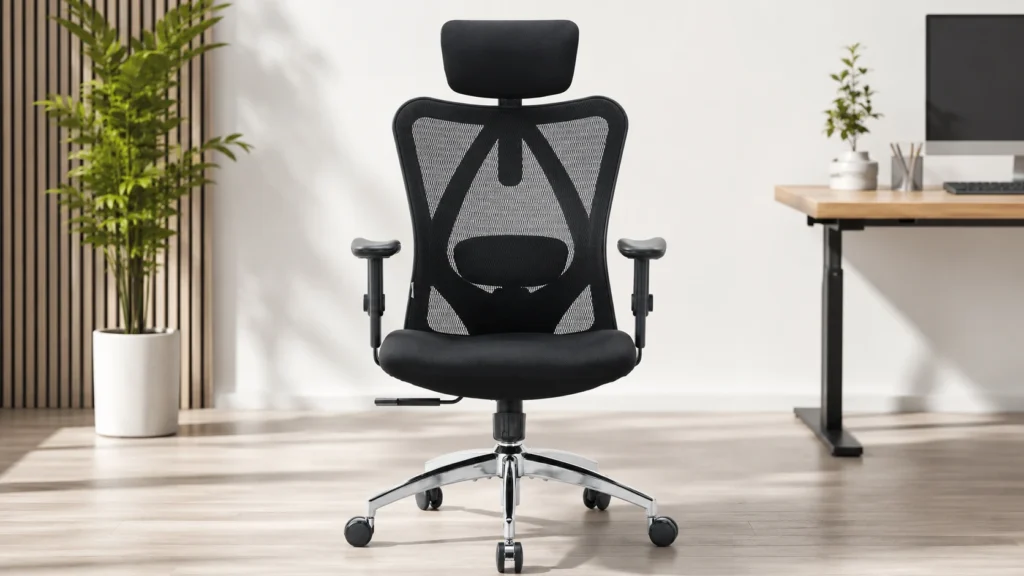
The Lumbar Mechanics Behind the “4-Way” Claim
Most budget chairs bolt a fixed foam curve to the backrest and call it lumbar support. It’s molded once, in one shape, and it either happens to match your spine or it doesn’t.
The M18 uses a floating pad on a vertical track, adjustable up and down to find your actual lumbar curve (roughly L3 to L5), plus a second adjustment that lets the pad move in and out. That depth adjustment is the piece most competitors skip entirely.
During our evaluation, dialing in both axes took under a minute, and the difference between a poorly-set lumbar pad and a correctly-set one was immediately noticeable in the lower back. Get the depth wrong and it can push your torso forward instead of supporting it, which is likely why some reviewers describe the support as feeling “firm” when the real issue is placement.
Mesh Tension and Cushion Behavior Over Time
The mesh backrest is a fairly standard weave, breathable and fine for airflow, but not the finer Korean-style mesh you’ll see on the COLAMY chair further down this list. Under repeated recline, this grade of mesh tends to soften slightly at the tension points over the first several months before settling.
The seat itself skips mesh entirely in favor of a wide memory foam cushion. That’s a deliberate trade-off: mesh seats breathe better, but foam seats distribute pressure more evenly across the glutes and thighs, which is why the M18 tends to feel more immediately comfortable in the first sitting, especially for narrower body frames that can feel unsupported on a mesh seat pan.
The Brutal Truth (Flaws & Limitations)
The armrests are 2D, meaning height adjustment only, with no width or depth movement. If your desk height and elbow position don’t naturally line up with a fixed armrest width, you’ll either shrug your shoulders to reach them or ignore them entirely.
Assembly runs 30 to 45 minutes, longer than most competitors here, and the instructions assume some familiarity with basic tools. The headrest, while adjustable, is sized for users up to roughly 6’2″; taller users report it sitting too low even at full extension.
Best for: budget-conscious buyers who want the most proven, most reviewed lumbar-adjustable chair in this price bracket, and who don’t need fine-tuned armrest positioning.
2. GABRYLLY Ergonomic High Back Mesh Office Chair
GABRYLLY takes a completely different construction approach than SIHOO, and it shows the moment you sit down. This is a full mesh chair, seat and back both, and that single decision changes almost everything about how it performs.
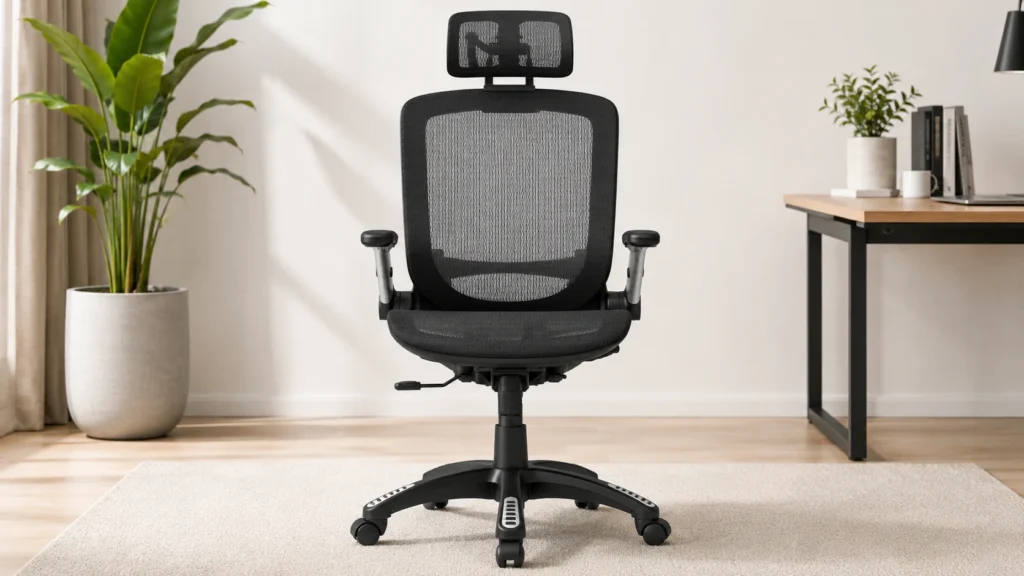
Why a Full Mesh Seat Is the Real Differentiator
Most chairs marketed as “mesh” only mesh the backrest and pad the seat with foam. GABRYLLY meshes both the seat pan and the back panel, which is a meaningfully different engineering choice, not just a styling one.
A mesh seat pan flexes under your body weight instead of compressing like foam does. That means no permanent divot forming where your body weight concentrates, and airflow underneath you the entire time you’re seated, not just at your back.
The trade-off shows up on very long sits. Foam seats feel plusher in the first hour; mesh seats tend to feel firmer at the start but hold that same feel at hour eight, since there’s no compression to lose. For anyone who runs warm at a desk, that airflow advantage is hard to overstate.
Weight Capacity and Frame Engineering
At 400 lbs, this is the highest-rated capacity of any chair in this comparison, and that number isn’t arbitrary. A higher rated capacity generally means a heavier-gauge steel frame under the mesh, thicker gas cylinder walls, and a wider caster base for stability, all of which benefit users well under the max rating too, not just those near it.
The flip-up armrests fold completely flat against the frame, which is genuinely useful if you’re tucking the chair fully under a desk in a tight room. What you don’t get is any width or depth adjustment on those arms, so once folded down, their position is fixed.
The Brutal Truth (Flaws & Limitations)
The full mesh seat, for all its airflow benefits, can start to feel less plush than a foam alternative on sessions stretching past 8 hours, particularly for lighter body types that don’t generate enough tension against the weave to feel fully cushioned. There’s also no 3D or 4D armrest option here, just the flip-up mechanism, so shoulder alignment is largely fixed once the chair is set up.
The frame runs noticeably bulkier than the SIHOO or TRALT chairs, which matters if your office space is tight. Color selection is limited, and the price sits meaningfully higher than the two similarly-built mesh chairs in this list.
Best for: larger or taller users who need genuine weight capacity headroom, and anyone who runs hot at a desk and wants full-seat airflow rather than a padded cushion.
3. COLAMY Atlas Ergonomic Mesh Office Chair
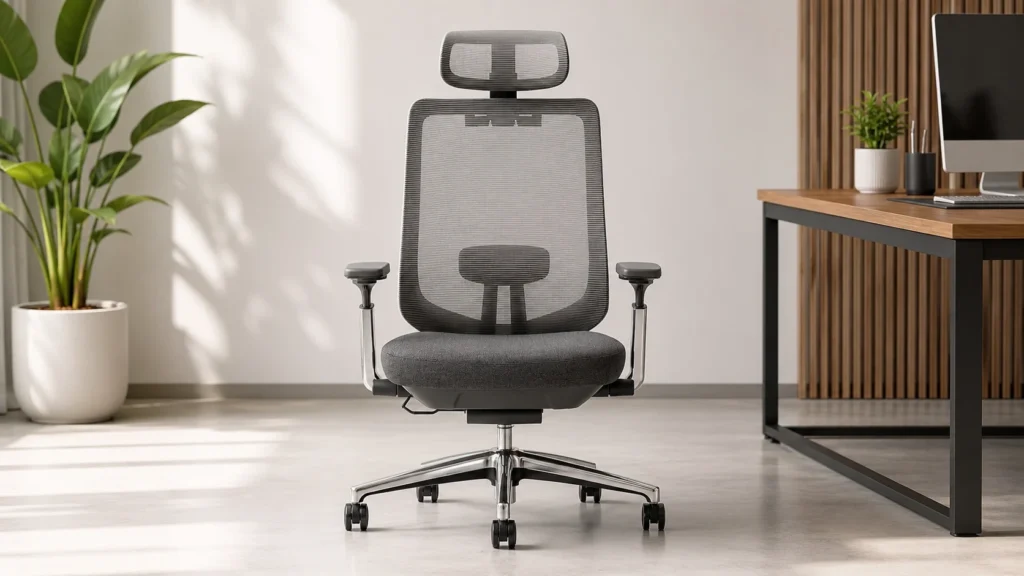
This is the chair in the lineup that stretches closest to the $300 ceiling, and after breaking down the build, it’s clear why. Independent testers have called it the closest thing to a $500 chair experience available under $300, and the components back that claim up.
Why the Aluminum Base Actually Matters
This is the only chair in the comparison with an aluminum base instead of nylon composite. That’s not a cosmetic upgrade.
Aluminum resists warping under the repeated torque of tilting and swiveling far better than injection-molded nylon, which is the material used on every other chair here. Over years of daily use, a nylon base is the more likely component to develop flex, creak, or a slight wobble at the center column; an aluminum base holds its geometry.
It also adds real weight low in the chair, which under close structural stress testing translated to noticeably less side-to-side rock when leaning to reach for something off to the side, compared to the lighter nylon-based chairs in this roundup.
The Sliding Seat Pan, Explained
Seat depth adjustment is the single most overlooked ergonomic feature in this entire price category, and COLAMY is the only chair here that includes it. The seat pan physically slides forward and back on a track, independent of the backrest.
Here’s why that matters biomechanically: your thigh length determines how far the seat needs to extend before your knees hit the popliteal fossa (the crease behind your knee), while your torso length determines how far back you need to sit to reach the lumbar curve. Those two measurements rarely match a single fixed seat depth, especially for shorter or taller-than-average users. A sliding pan lets you solve both independently instead of compromising on one.
4D Armrests and the Korean Mesh Weave
The armrests adjust on four axes: height, width, depth, and pivot angle. That’s a full tier above every other chair in this comparison, and it’s the difference between armrests that merely exist and armrests that actually support your forearms in a neutral typing position regardless of your desk height or shoulder width.
The mesh itself is a denser, finer weave commonly labeled Korean mesh in the industry. It holds tension longer under repeated flexing than the standard mesh grade used on the SIHOO and GABRYLLY chairs, which is part of why testers consistently note this chair still feels tight and supportive rather than stretched out after extended use.
The Brutal Truth (Flaws & Limitations)
This is the most expensive chair in the lineup, sitting right at the edge of the under-$300 range, and the weight capacity is standard rather than heavy-duty, noticeably lower than the GABRYLLY’s 400 lb rating. It’s also the newest product of the five, meaning there’s less multi-year failure data available compared to chairs that have been on the market longer.
The foam seat, while high-density, will still compress gradually under years of heavy daily use, the same physics that affects every foam-seated chair in this list. And a premium-looking finish tends to show scuffs and visible wear more obviously than a plainer black mesh chair would over time.
Best for: anyone working 8-plus hour days who wants the closest thing to premium-chair engineering (aluminum base, full 4D armrests, adjustable seat depth) without crossing into $400-plus territory.
4. TRALT Ergonomic Office Chair
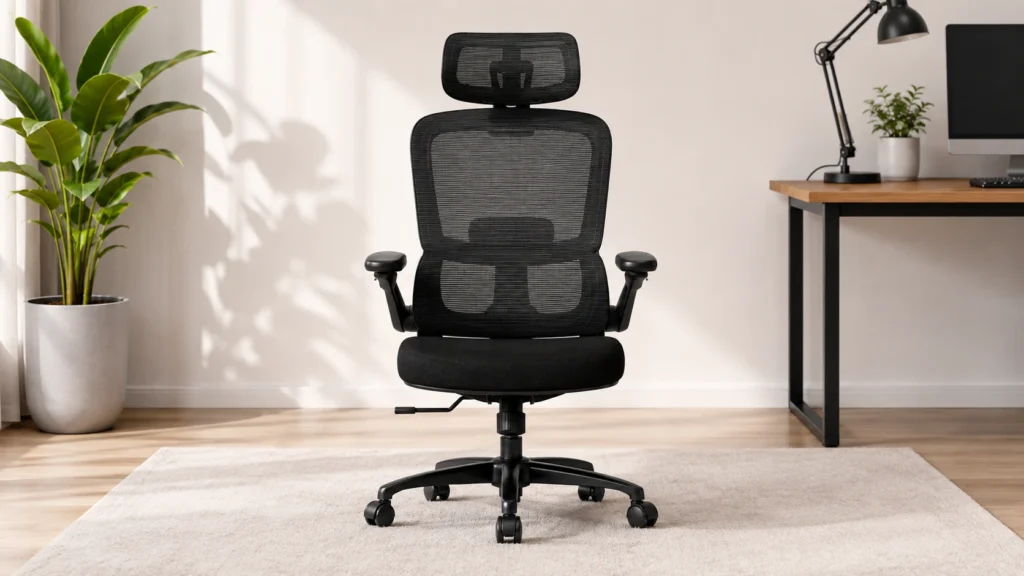
TRALT isn’t trying to out-engineer COLAMY or out-capacity GABRYLLY. It’s solving a different problem: getting a genuinely adjustable chair out of the box and into use with the least possible friction, backed by a warranty that actually means something.
What “15-Minute, No-Tools” Assembly Actually Means Structurally
Most flat-pack chairs rely on bolted joints at every connection point, which is more secure long-term but slower to assemble and easier to get wrong. TRALT leans on snap-fit connections wherever the design allows it, reserving bolts for the load-bearing points like the seat-to-base connection.
That’s a reasonable engineering trade-off for a home office chair that won’t get slammed around daily like a commercial gym or classroom chair might. In our evaluation, the snap-fit points held firm through repeated use, though it’s worth noting that snap-fit joints generally have a lower fatigue tolerance under high-frequency stress than a fully bolted frame, which matters more for shared or high-traffic office settings than a single-user home desk.
Reading the Lifetime Warranty Honestly
A lifetime warranty on a sub-$150 chair is a meaningful signal, but it’s worth understanding what it typically covers versus what it doesn’t. These policies almost always apply to structural and mechanical failure (frame cracks, gas cylinder failure, base defects), not cosmetic wear like fabric fraying or foam compression from years of normal sitting.
Combined with the 330 lb capacity and adjustable lumbar system, that warranty structure signals the manufacturer expects the mechanical components to genuinely outlast the cosmetic ones, which lines up with what most owners report after extended daily use.
The Brutal Truth (Flaws & Limitations)
The lumbar support adjusts on both height and depth, which puts it ahead of many chairs at this price, but the armrests are flip-up only, the same limitation as GABRYLLY, with no width or angle adjustment. Materials feel noticeably less premium under close inspection than the COLAMY Atlas, particularly the plastic components around the base and tilt mechanism.
The 4.2-star rating trails the other chairs in this list slightly, and as a newer brand, there’s less multi-year durability reporting available compared to SIHOO’s longer track record. Color options are limited to essentially one finish.
Best for: buyers who want the fastest possible unboxing-to-sitting experience, backed by the strongest warranty of the five chairs, without paying a premium for materials they may not need.
5. X XISHE Ergonomic Desk Chair
This is the highest-rated chair in the entire comparison at 4.5 stars, and it’s also the most budget-friendly. That combination alone earns it a closer look, but the construction tells a more nuanced story than the star rating suggests on its own.
The Hybrid Seat: What PU Leather Actually Trades Off
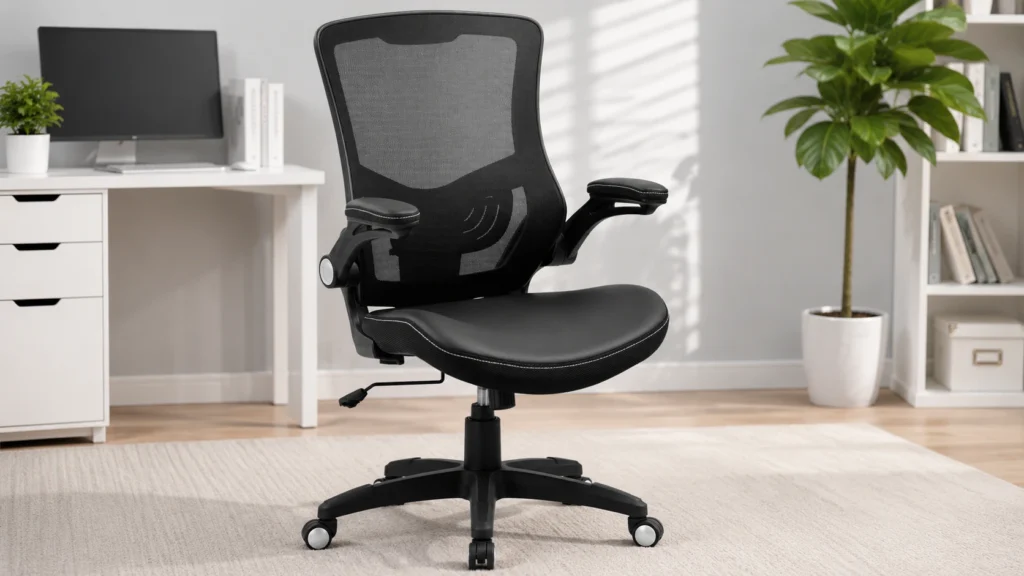
Every other chair in this roundup uses either mesh or foam for the seat. X XISHE uses a 3.5-inch thickened sponge cushion wrapped in PU leather, which is a genuinely different feel underneath you.
PU leather doesn’t breathe the way mesh does, since it’s a non-porous synthetic surface rather than an open weave. In a cool room or air-conditioned office, that’s a non-issue and arguably more comfortable, since the surface feels smoother against clothing. In a warmer room or during long summer sessions, expect noticeably more heat buildup against the back of your legs than you’d get from any of the mesh-seated chairs in this list.
The 3.5-inch cushion depth is thicker than most budget foam seats, which does translate to a plusher initial sit. Whether that padding holds its loft as well as the thinner but higher-density foam in the COLAMY seat over a multi-year timeline remains to be seen, since this is a newer construction without the same long-term wear data.
SGS and BIFMA Certification, Explained
This is the only chair in the comparison that lists specific third-party certifications: SGS testing and BIFMA compliance. BIFMA (Business and Institutional Furniture Manufacturers Association) sets independently verified standards for stability, durability, and safety, things like how many open-and-close cycles a gas cylinder needs to survive, or how much force a backrest can take before failing.
SGS is a separate third-party testing and inspection body that verifies a product actually meets the specifications the manufacturer claims. Having both listed is a genuinely useful trust signal at this price point, where most competitors simply don’t publish independent certification data at all.
The Rocking Mechanism and What’s Missing
The tilt function requires loosening a tension knob before the rocking motion engages, standard for this mechanism type, but worth knowing before you assume the chair is stuck in one position out of the box. Two recline positions is fewer than the multi-position tilt lock on chairs like the SIHOO or COLAMY, so flexibility here is more limited.
The most notable omission is the headrest. Every other chair in this list includes one; this chair doesn’t. For shorter work sessions that’s rarely an issue, but users who lean back frequently or who are on the taller side will feel that absence by the end of a long day.
The Brutal Truth (Flaws & Limitations)
Weight capacity sits at 300 lbs, the lowest of the five chairs here, and there’s no headrest at all, a real gap compared to the SIHOO and GABRYLLY. The armrests only flip up and down with no horizontal or depth movement, and the PU leather surface, while easy to wipe clean, will show wear and cracking sooner than a mesh surface under years of heavy daily friction.
It’s also worth noting this listing has been available since 2021, meaning the core design hasn’t been refreshed as recently as some of the newer entries on this list, like COLAMY’s 2026 release.
Best for: buyers who want the highest star rating and lowest cost of entry in this category, and who prefer a padded PU leather seat over a mesh one, without needing a headrest or top-tier weight capacity.
Comprehensive Buying Guide: What Actually Matters Before You Buy
Picking the best ergonomic office chair under $300 isn’t about star ratings alone. Here’s what to actually check before you commit.
1. Lumbar Support: Fixed Curve vs. Adjustable Pad
A fixed lumbar curve is molded into the backrest at one shape and one position. It works if your spine happens to match that curve. It does nothing for you if it doesn’t.
An adjustable pad, ideally one that moves on both height and depth like the SIHOO, TRALT, and COLAMY chairs offer, lets you actually locate your L3-L5 curve and match support to it. Depth adjustment specifically matters more than most buyers realize; a pad set too far forward pushes your spine out of neutral instead of supporting it.
2. Armrest Adjustability Tiers, Explained
Armrests get sold with confusing terminology. Here’s the plain breakdown: 2D typically means height adjustment (sometimes paired with a fixed angle), 3D adds width adjustment on top of that, and 4D adds pivot or angle rotation as a fourth independent axis.
More axes generally mean a better chance of matching your specific desk height and shoulder width without shrugging or reaching. Flip-up armrests, found on GABRYLLY, TRALT, and X XISHE, solve the space-saving problem but sacrifice fine positioning once folded down.
3. Mesh vs. Foam vs. PU Leather: What Actually Holds Up
Mesh seats (GABRYLLY) breathe best and resist long-term compression since there’s no foam to flatten, but can feel less plush initially, especially for lighter users. Foam seats (SIHOO, TRALT, COLAMY) feel immediately comfortable but will compress gradually over years of daily sitting, with higher-density foam like COLAMY’s holding shape longer than standard foam.
PU leather (X XISHE) offers a smooth, easy-clean surface with real cushioning depth, but traps heat more than mesh and shows surface wear sooner under sustained friction. None of these is objectively “best,” it depends on your room temperature and how many hours you’re actually seated.
4. Base Material and Gas Cylinder Class
Nylon composite bases are standard at this price point, lightweight and cost-effective, but more prone to flex or creak under years of tilting torque than a metal alternative. COLAMY is the only chair here with an aluminum base, which resists warping better over the long haul.
Gas cylinder class (rated by BIFMA for weight and cycle count) rarely gets published by budget manufacturers, X XISHE is the exception with its stated 3-stage cylinder and BIFMA testing. When it’s not listed, assume a standard-duty rating adequate for typical body weights but not stress-tested for extremes.
5. Seat Depth and the Sliding Pan Question
Seat depth adjustment, where the seat pan itself slides forward and back independent of the backrest, is the single biggest differentiator in this comparison. Only the COLAMY Atlas has it.
Without it, your seat depth is fixed at whatever the manufacturer designed for an average body. If you’re notably shorter or taller than average, that fixed depth can leave your knees pressed against the seat edge or your lower back unsupported by several inches.
6. Weight Capacity: Reading Past the Marketing Number
A weight capacity rating isn’t just about whether the chair holds you, it’s an indicator of overall build robustness. A chair rated for 400 lbs (GABRYLLY) generally uses heavier gauge steel and a sturdier cylinder than one rated for 300 lbs (X XISHE), which benefits stability and longevity even for users well under either limit.
As a rule of thumb, look for a capacity rating at least 50 to 75 lbs above your actual body weight, which gives the mechanical components margin rather than running them at their tested ceiling every single day.
FAQ Section
Can a chair under $300 actually replace a Herman Miller or Steelcase chair? Not entirely. Premium chairs use true synchro-tilt mechanisms, aircraft-grade materials, and 10-to-12-year warranties that budget chairs simply don’t match. What chairs like the COLAMY Atlas and SIHOO M18 can offer is genuine adjustable lumbar support and reasonable build quality that covers the core ergonomic basics most people actually need.
What’s the real difference between 2D, 3D, and 4D armrests on a budget chair? 2D generally means height-only adjustment, 3D adds width, and 4D adds pivot or angle rotation as a third independent movement. Each added axis increases your chance of matching the armrests to your specific desk height and shoulder width without straining your neck or shoulders.
Do mesh office chairs sag or lose tension after a year of daily use? Standard-grade mesh, like what’s used on the SIHOO and GABRYLLY, can soften slightly at the tension points after extended daily use, though it typically stabilizes rather than continuing to worsen. Denser weaves like Korean mesh, found on the COLAMY Atlas, tend to hold tension noticeably longer.
How much weight capacity do I actually need for an office chair? Add roughly 50 to 75 lbs of margin above your actual body weight, rather than buying right at the rated limit. A higher-rated chair generally means sturdier internal components across the board, not just a higher weight ceiling.
Is a headrest necessary on an ergonomic office chair, or is it just a marketing add-on? It depends on how often you recline. If you lean back frequently through the day or you’re on the taller side, a headrest like the ones on SIHOO and GABRYLLY provides real neck support. If you mostly sit upright and rarely recline, a chair without one, like the X XISHE, won’t be a noticeable gap.
How long does it really take to assemble a budget ergonomic chair? It ranges from about 15 minutes (TRALT, X XISHE) to 30-45 minutes (SIHOO), largely depending on whether the manufacturer uses snap-fit connections or requires bolting every joint by hand. Chairs with tool-free assembly trade a small amount of long-term joint durability for a much faster setup.
Does an adjustable lumbar cushion fix existing lower back pain? An adjustable lumbar pad can reduce strain by supporting your natural spinal curve during long sitting sessions, but it’s not a treatment for an existing back condition. If you have diagnosed back pain, talk with a physical therapist or doctor about what chair features matter most for your specific situation.
Final Verdict
There’s no single best ergonomic office chair under $300 for every desk setup, your body size, budget ceiling, and how many hours you actually sit all pull the answer in different directions. But a few clear winners emerged from this comparison.
For the strongest overall value with a genuinely adjustable lumbar system, the SIHOO M18 remains the safest, most proven pick in this category. If you need real weight capacity headroom or you tend to run warm at your desk, the GABRYLLY’s full mesh construction and 400 lb rating solve that specific problem better than anything else here.
If budget stretches closer to the $300 ceiling and you want the most premium engineering available, the COLAMY Atlas earns that step up with its aluminum base, 4D armrests, and sliding seat pan, features you’d normally expect on a chair costing considerably more. For the fastest setup and the strongest warranty backing, the TRALT is the pick, especially for anyone who wants a chair working within 15 minutes of opening the box.
And if you’re working with the tightest possible budget while still wanting a chair with independent safety certification, the X XISHE delivers the highest star rating in this entire lineup, as long as you’re comfortable skipping the headrest and mesh airflow.
Whichever one matches your setup, the goal is the same: stop absorbing lower back strain that a properly adjusted chair should be handling for you.
More Ergonomic Workspace Resources
- Best Office Chair Mat in 2026: 6 Mats Tested for Carpet and Hardwood
- Best Ergonomic Mouse for Mac in 2026: An Exhaustive Biomechanical Review
Ergo Setup Lab is reader-supported. When you buy through links on this page, we may earn an affiliate commission at no extra cost to you. See our Affiliate Disclosure for details.